What Is GeM Portal? How It Works for Government Procurement
Learn what is gem portal, the registration process, and how to fulfill orders. Master India’s digital marketplace for government procurement today.
The Government e-Marketplace (GeM) portal is India's official online procurement platform where central and state government agencies buy goods and services from registered sellers. Since its launch in 2016, it has processed orders worth lakhs of crores, making it one of the largest public procurement platforms in the country.
For contractors and suppliers in the AEC industry, GeM represents a direct channel to government buyers, no middlemen, no opaque processes. But the portal's scale is also what makes it challenging. With thousands of product categories, evolving compliance requirements, and constant listing updates, finding the right opportunities takes real effort. Many firms either miss relevant bids entirely or spend hours sifting through listings that don't match their qualifications.
That's exactly the problem we built Arched to solve. Our platform monitors GeM alongside 500+ other government procurement portals, using AI to match opportunities to your firm's actual credentials and experience, not just keywords. This article breaks down how GeM works, who it's designed for, how registration works, and what you need to know to use it effectively as a government contractor or supplier.
Why the GeM portal matters in public procurement
Before GeM launched in 2016, government procurement in India relied on manual tendering processes, paper-based documentation, and purchasing decisions spread across thousands of disconnected departments. Buyers had no standard price benchmarks, and suppliers faced high barriers just to reach government buyers. Understanding what is GeM portal and what it replaced helps you see why it has become central to any serious public procurement strategy in India today.
GeM removed a layer of intermediaries that previously drove up costs and slowed procurement cycles across government departments.
The scale of opportunity on GeM
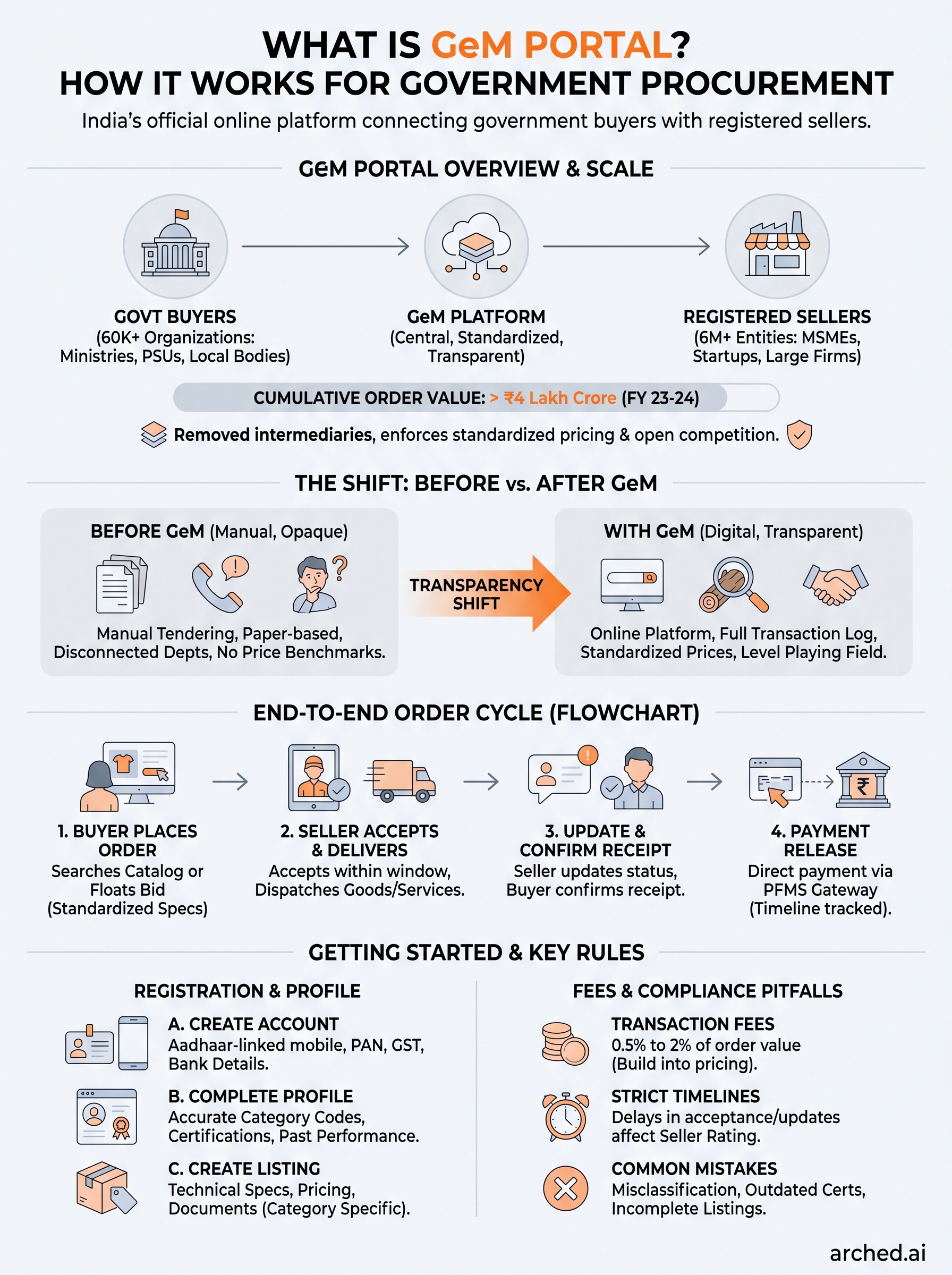
GeM now connects over 60,000 government buyer organizations with more than 6 million registered sellers across the country. These buyers include central ministries, state departments, public sector undertakings, and autonomous bodies. For any supplier or contractor in the AEC sector, that reach means your services can get in front of procurement officers at every level of government through one platform, rather than requiring separate relationships across dozens of departments.
In FY 2023-24, GeM crossed Rs. 4 lakh crore in cumulative order value. That number signals how much of India's public spending now flows through this single channel. If your firm is not registered and actively monitoring it, you are leaving a significant portion of the government contract pipeline completely untracked.
How transparency shifted the competitive landscape
GeM's structure enforces standardized pricing and open competition for every purchase. Buyers can review market-rate benchmarks before approving an order, and the full transaction history is logged on the platform. This reduces the scope for price manipulation and gives smaller and mid-sized firms a genuine shot at competing against larger incumbents on merit alone.
For BD managers and bid teams in construction and infrastructure, this shift is practical. You no longer need pre-existing relationships to place your firm in front of government buyers. Your listed credentials, certifications, and past performance data carry the weight instead, which makes the quality of your profile on GeM directly relevant to how much work you can win.
How the GeM portal works end to end
GeM operates as a two-sided marketplace where government buyers place demand and registered sellers fulfill it. Once you understand what is GeM portal at a functional level, the transaction flow becomes straightforward: buyers search for products or services, compare options against standardized price benchmarks, and place orders directly through the platform without going through any intermediary.
Buyer and seller roles on the platform
Government buyers on GeM range from central ministries to district-level offices. They create purchase requirements, set specifications, and either select from existing catalog listings or float bids for custom requirements. As a seller, your job is to maintain an accurate, updated profile so your listings surface when buyers search relevant categories. Incomplete profiles or outdated credentials push your listings down and reduce your visibility to active procurement officers.
The order cycle from listing to payment
After a buyer places an order, the seller receives a notification and must confirm acceptance within the specified window. From there, you dispatch the goods or deliver the service and update the platform with proof of delivery or completion. The buyer then confirms receipt and releases payment through the integrated government payment gateway, which connects directly to the Public Financial Management System (PFMS).

Delays in updating delivery status on GeM can push payment timelines significantly, so keeping your order dashboard current is not optional.
Payment timelines vary by department, but GeM's built-in tracking gives you a clear view of where each order stands at any point in the cycle.
Who can use GeM and what you can buy or sell
GeM is open to two distinct groups: government buyers and registered sellers. Understanding what is GeM portal in terms of eligibility helps you figure out exactly where your firm fits and what procurement activity you can participate in.
Who qualifies as a buyer or seller
Government buyers include central and state government ministries, public sector undertakings (PSUs), autonomous bodies, local bodies, and universities receiving government funding. On the seller side, any Indian registered entity, including proprietorships, partnerships, LLPs, private limited companies, and startups recognized under DPIIT, can register to list products or services.
Startups with DPIIT recognition get a dedicated registration pathway on GeM, which waives certain turnover and experience requirements that standard sellers must meet.
What categories are available on the platform
GeM covers an extensive range of product and service categories relevant to the AEC sector. You can list civil construction services, consultancy services, IT equipment, office supplies, vehicles, and works contracts under specific categories. For infrastructure firms, services like project management consultancy, design services, and site supervision all have dedicated category codes on the platform.
Each category carries its own set of technical specifications and compliance requirements, so reviewing the category structure before you list is worth the time. Misclassifying your services is one of the most common reasons firms get overlooked by relevant buyers searching for exactly what you offer.
How to register and start using the GeM portal
Understanding what is GeM portal is only the first step. To actually use it, you need to complete the seller registration process on gem.gov.in, which requires a set of key documents and verified credentials before you can list any services or participate in government procurement.
Creating your seller account
To register as a seller, you need your Aadhaar-linked mobile number and a valid PAN. The platform verifies your identity through Aadhaar OTP, then links your business registration details before activating your account. Keep your GST registration certificate, bank account details, and business incorporation documents ready before you start, since the system prompts you for these in sequence and incomplete submissions stall the process.
Firms registered under MSME or with DPIIT startup recognition should select the correct business category during registration, as it unlocks specific procurement preferences on the platform.
Setting up your profile and first listing
Once your account is active, your immediate priority is completing your seller profile with accurate category codes, certifications, and past performance data. Buyers search by category, so listing under the wrong code means qualified buyers simply won't find you.

After your profile is complete, you can create product or service listings within your approved categories. Each listing requires technical specifications, pricing, and supporting documents. Review the category-specific requirements carefully before submitting, since incomplete listings get flagged for correction and delay your visibility on the platform.
Rules, fees, and common issues to avoid
Once you move past understanding what is gem portal and complete your registration, knowing the platform's rules and fee structure saves you from costly compliance errors. GeM enforces strict guidelines around listing accuracy, order fulfillment timelines, and seller conduct, and violations can result in account suspension.
Fee structure for sellers
GeM charges sellers a transaction fee on each order, which varies by category and order value. Currently, the platform applies a fee ranging from 0.5% to 2% of the transaction value, deducted before payment reaches your account. Review the latest fee schedule on gem.gov.in before pricing your listings, since underpricing after fees can erode margins on large government orders.
Building the GeM transaction fee into your pricing from the start prevents margin surprises when payments arrive.
Common compliance mistakes to avoid
Misclassifying your service category is the most frequent error firms make on GeM, and it directly reduces how many relevant buyers find your listings. Beyond categorization, failing to update your GST registration or business certifications when they renew creates a compliance flag that can freeze your seller account without warning.
Delays in confirming order acceptance or updating delivery status are another practical problem. GeM enforces strict response windows, and missing them affects your seller rating, which buyers actively review before selecting suppliers. Keep your order dashboard monitored daily, especially during high-procurement periods when government departments tend to place multiple orders simultaneously.
What to do next
Now you have a clear answer to what is GeM portal and how it fits into India's public procurement landscape. The platform gives you direct access to government buyers across thousands of departments, but registration alone does not generate results. Your profile quality, category accuracy, and how consistently you monitor new listings determine how much of that opportunity actually reaches your firm.
GeM is just one of the 500+ portals where government contracts appear. Monitoring all of them manually while also managing active bids is not realistic for most BD teams. That is where Arched helps. The platform scans GeM alongside state and central procurement portals, matches opportunities to your specific credentials and past project history, and flags relevant tenders before your team would otherwise find them.
If you want to stop missing contracts that your firm already qualifies for, explore what Arched can do for your pipeline.