SAP Ariba Spend Analysis: Features, Benefits, And Successor
Learn how SAP Ariba Spend Analysis improves procurement visibility and savings. Explore its core features and the transition to SAP Spend Control Tower.
Procurement teams across India's AEC sector deal with massive volumes of spending data, from material purchases to subcontractor payments, often scattered across disconnected systems. SAP Ariba Spend Analysis emerged as one of the most widely adopted tools to bring that data into a single, categorized view, giving organizations real visibility into where their money goes.
At Arched, we build AI that helps infrastructure firms and government contractors cut through procurement noise, matching them to the right tenders, parsing complex bid documents, and mapping strategic growth paths. We understand firsthand how critical clean procurement data is to making smart bidding and spending decisions. That's exactly the problem SAP Ariba Spend Analysis was designed to solve on the enterprise procurement side.
This article breaks down its core features, the benefits it delivers, and why SAP has since moved toward a successor product, the SAP Spend Control Tower, to replace it.
What SAP Ariba Spend Analysis does
At its core, SAP Ariba Spend Analysis is a cloud-based procurement intelligence platform that pulls spending data from multiple source systems, cleans and classifies it, and surfaces insights your procurement team can act on. Instead of having analysts run reports from separate ERP systems or dig through stacks of purchase orders, the platform consolidates and organizes that data automatically so the focus shifts to decision-making rather than data wrangling.
Where the data comes from
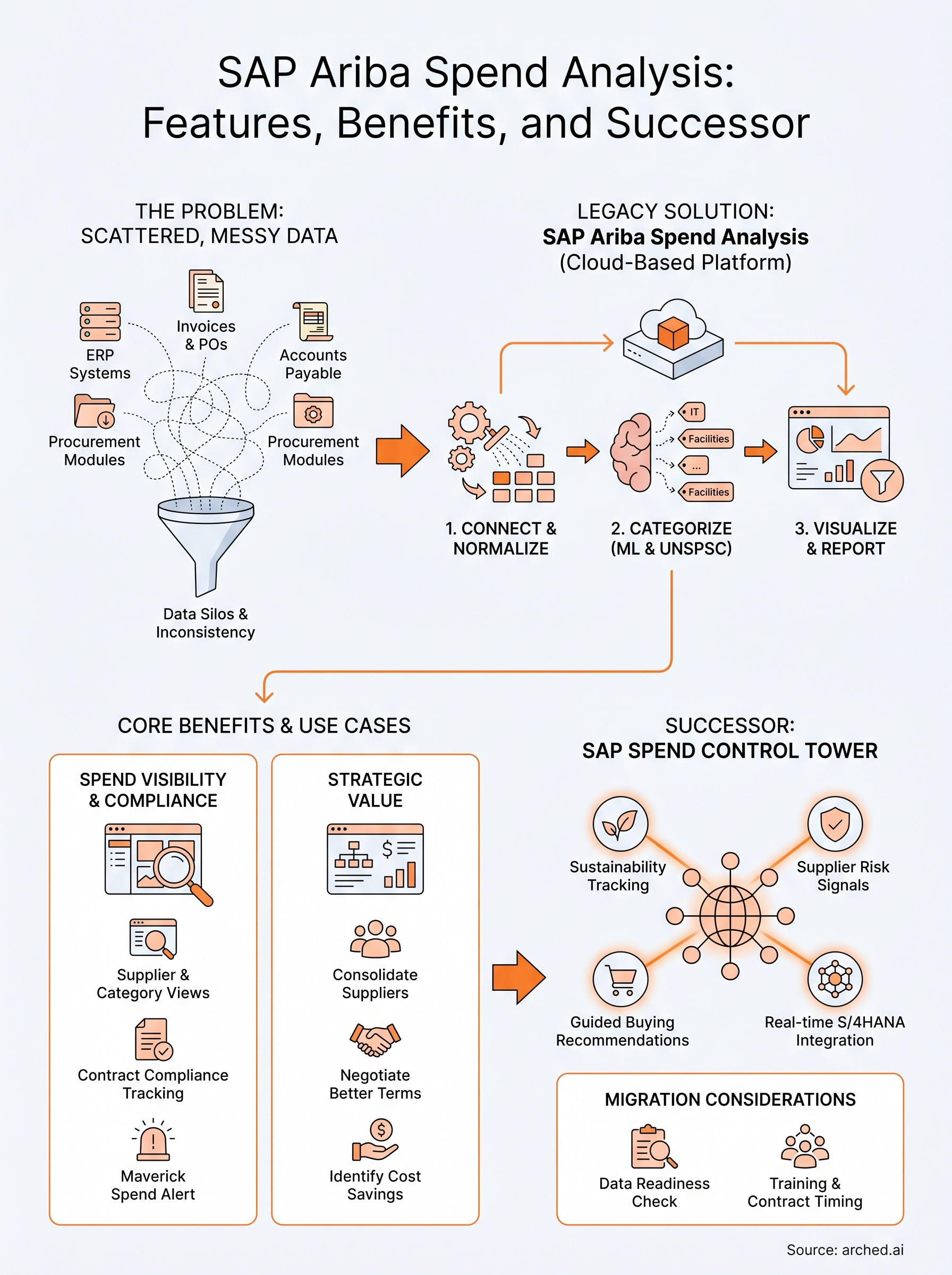
Your procurement data rarely lives in one place. It typically sits across ERP platforms, accounts payable systems, supplier invoices, and procurement modules, often using different naming conventions and currencies. SAP Ariba Spend Analysis connects to these disparate sources through pre-built integrations and data connectors, then normalizes the incoming records into a consistent format. This normalization process is where a significant portion of the platform's value lies, because raw transactional data is almost always messy, with duplicate supplier names, inconsistent categories, and mismatched cost centers that make direct comparison nearly impossible without cleaning.
Without normalization, spend data from multiple systems tells you very little, since you end up comparing records that do not actually align.
How the platform categorizes spend
Once your data is loaded and cleaned, the platform applies a structured classification layer using taxonomies like UNSPSC (United Nations Standard Products and Services Code). Machine learning models assign each transaction to a spend category, and the system improves its accuracy over time as more records flow through. Your team can then break down spending by supplier, category, geography, or business unit.
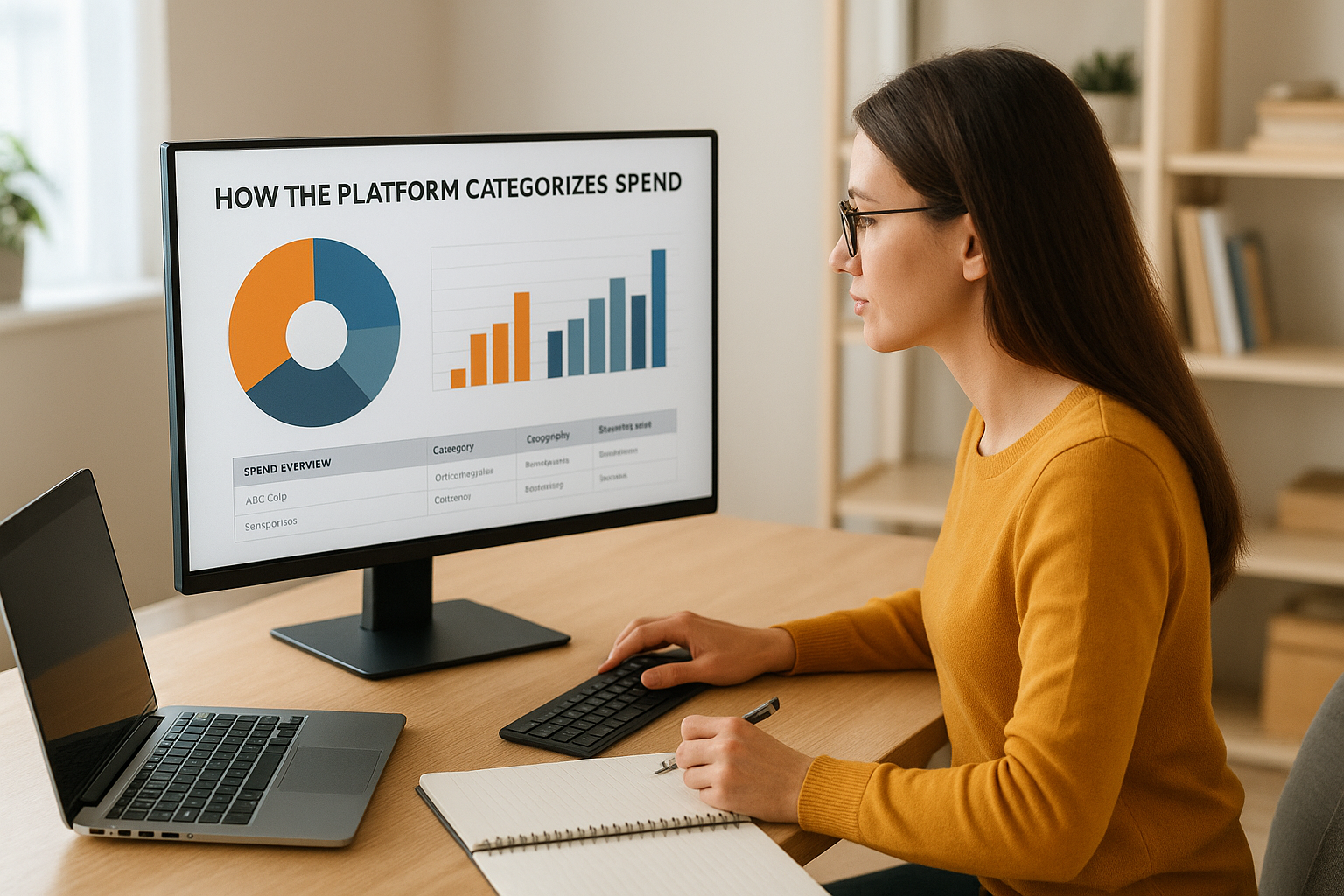
For firms working in India's AEC and public infrastructure sectors, this structured breakdown is particularly useful. It helps connect internal spending patterns to strategic decisions around which tenders to pursue, what supplier relationships to strengthen, and where budget concentration creates risk.
Core features that power spend visibility
SAP Ariba Spend Analysis delivers its value through a set of tightly connected features that work together to give you a clear, reliable picture of your procurement activity. Each feature builds on the last, so the output your team sees is both accurate and actionable.
Spend dashboards and reporting
The platform provides pre-built dashboards that display your spending across dimensions like supplier, category, region, and time period. You can filter, drill down, and export these views without writing a single query. Customizable reports let your procurement team track trends over time, compare periods, and identify outliers quickly.
The ability to slice spend data by multiple dimensions at once is what separates genuine visibility from basic reporting.
Supplier and contract compliance tracking
Beyond categorization, the platform lets you track how much of your spend runs through contracted suppliers versus off-contract purchases. This is critical for identifying maverick spending, which quietly erodes the value of negotiated agreements. Contract compliance metrics surface where your teams are bypassing preferred suppliers.
Key metrics the platform tracks here include:
- Off-contract spend percentage by department
- Supplier consolidation opportunities
- Purchase order compliance rates
Benefits and common procurement use cases
SAP Ariba Spend Analysis turns raw transactional data into decisions your team can act on immediately. Procurement teams that previously spent days pulling reports can now access categorized, cross-system spend data in minutes, freeing time for supplier negotiation and strategic sourcing. For firms in India's AEC sector, where project-level spending is often fragmented across sites and geographies, this kind of visibility has direct implications for how competitive your bids can be.
Visibility into spending patterns is not just a reporting benefit, it directly shapes how well your procurement strategy holds up under scrutiny.
Reducing supplier fragmentation
Many organizations unknowingly work with dozens of vendors providing the same goods or services. The platform surfaces these overlaps so your team can consolidate suppliers and negotiate better contract terms based on combined volume rather than scattered individual purchases.
Common outcomes from supplier consolidation include:
- Fewer invoices to process monthly
- Stronger leverage in contract renewals
- Lower risk of inconsistent quality across vendors
Identifying cost-saving opportunities
The platform helps you spot budget leakage quickly. By showing which departments spend outside approved contracts, it points your team at the areas where renegotiation or policy changes will have the strongest financial impact.
Your procurement leadership can also use the platform's historical trend data to track whether cost-reduction initiatives are actually working over time. Instead of relying on one-off reports, you get a continuous view of spend performance across the entire organization.
SAP Spend Control Tower as the successor
SAP formally positioned the SAP Spend Control Tower as the replacement for SAP Ariba Spend Analysis, shifting from a standalone reporting module to a more integrated, real-time intelligence layer built directly into the broader SAP Business Network. If your organization currently relies on the older platform, this change affects how you access spend insights and what capabilities are available going forward.
SAP Spend Control Tower is not just a rebrand. It represents a structural shift in how SAP delivers procurement visibility across its entire product ecosystem.
What the new platform adds
The SAP Spend Control Tower extends what SAP Ariba Spend Analysis offered by combining spend categorization with sustainability tracking, supplier risk signals, and guided buying recommendations in a single interface. Rather than looking at historical spending in isolation, you can now connect that data to active supplier performance and compliance status simultaneously.

The platform also introduces tighter integration with SAP S/4HANA and SAP Business Network, reducing the data lag that sometimes affected reporting accuracy in the older tool. For procurement teams that need both visibility and forward-looking signals, this integration means your spend picture stays current rather than reflecting a delayed snapshot of activity from prior periods.
What to consider before moving or switching
Deciding whether to migrate from SAP Ariba Spend Analysis to the SAP Spend Control Tower, or to adopt either platform for the first time, depends on practical factors specific to your current setup and procurement maturity. Skipping this evaluation step typically leads to disrupted reporting workflows and unexpected costs during the transition.
Data readiness and integration complexity
Your existing data quality directly impacts how smoothly any migration goes. If your source systems carry inconsistent supplier naming or mismatched cost centers, those problems follow you into the new platform unless you resolve them first.
Auditing your data before switching prevents cleanup work from stalling the transition mid-project.
Addressing these issues upfront typically means checking for duplicate vendor records, misaligned category codes, and currency inconsistencies across your ERP and AP systems before you begin any data transfer.
Licensing, contract timing, and internal readiness
Check your current contract terms with SAP before committing to a switch, since renewal timing and exit clauses affect when a transition makes financial sense. Your internal procurement team needs structured training time on the new interface to avoid a drop in reporting output during the cutover window.
Beyond contract timing, run a readiness check with the people who use spend reports daily. Their feedback on what the current platform does well tells you exactly which capabilities the new setup must replicate from day one.
Next steps for clearer spend decisions
Whether you're still running SAP Ariba Spend Analysis or evaluating the move to SAP Spend Control Tower, the foundation stays the same: clean data, consistent categorization, and a team that knows how to act on what the platform surfaces. Start by auditing your current spend data quality, then identify the reporting gaps your team hits most often. Those gaps tell you exactly what to prioritize in any upgrade or migration plan.
For firms in India's AEC and government contracting space, spend visibility connects directly to bid competitiveness and strategic growth. Knowing where your procurement budget concentrates helps you decide which contracts to pursue and which supplier relationships to strengthen before submitting a proposal.
Connecting procurement intelligence to active contract strategy is where the real advantage sits. If you want to see how that connection works in practice for government tenders, explore what Arched can do for your business.