Simulation Driven Design Software: What It Is And Benefits
Simulation Driven Design Software: What It Is And Benefits
Engineering decisions made early in design determine up to 80% of a project's final cost. Yet traditional workflows force engineers to iterate manually through a handful of options, hoping they've found the right balance between performance, budget, and constructability. Simulation driven design software changes this equation entirely.
Instead of guessing which configuration might work best, engineers can now test thousands of variations before committing to a single approach, validating structural performance, cost implications, and code compliance in parallel. The result is faster iteration cycles, fewer expensive surprises during construction, and designs optimized across multiple objectives simultaneously.
For bridge infrastructure specifically, this shift from reactive checking to proactive optimization represents a fundamental change in how projects move from concept to construction.
This article explains what simulation driven design software actually does, how it integrates into engineering workflows, and the measurable benefits it delivers. Whether you're evaluating platforms for your firm or simply trying to understand where the industry is heading, you'll walk away with a clear picture of the technology and its practical applications.
Why simulation-driven design software matters
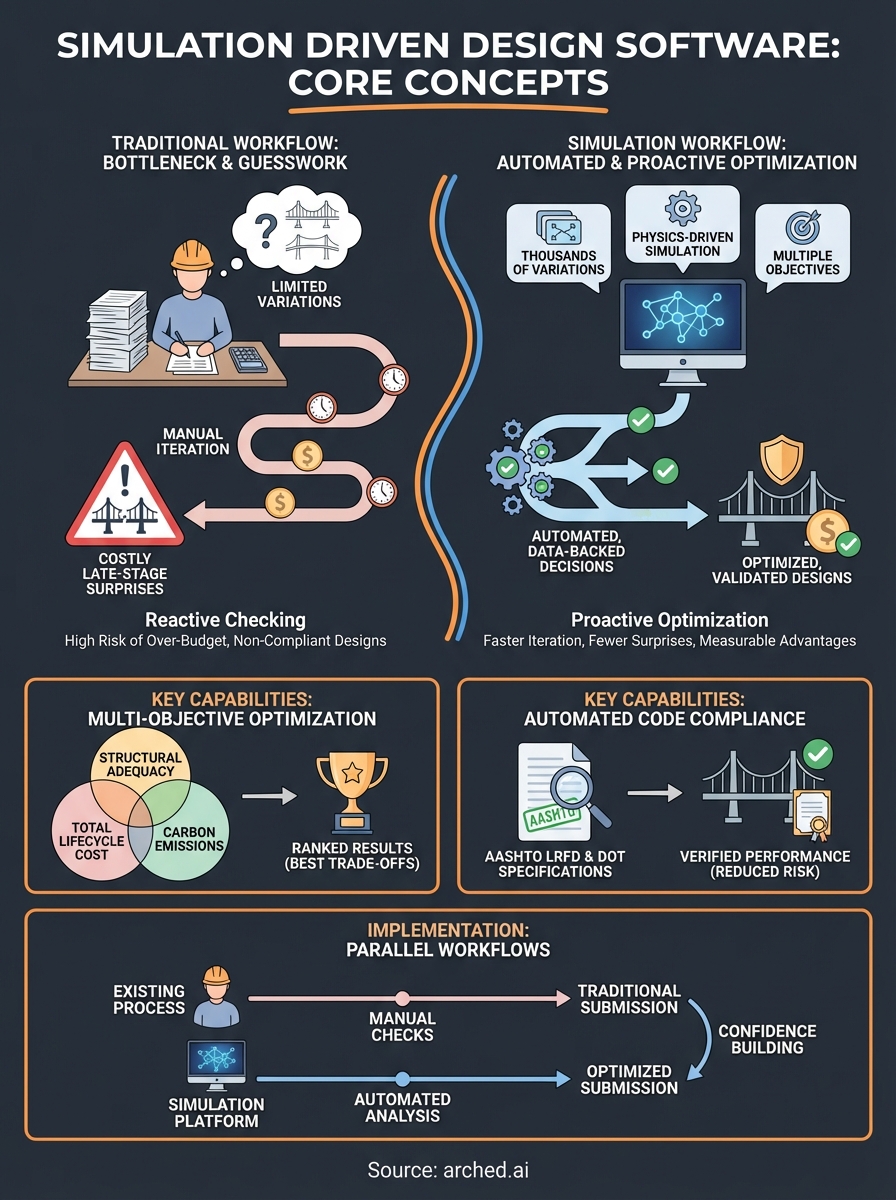
Traditional engineering workflows create a dangerous bottleneck at the worst possible moment. You spend weeks designing a bridge, submit plans, and only then discover that material costs exceed budget or that a critical span violates load deflection limits. By that point, redesigning means starting over, which most teams simply can't afford. This reactive approach forces you to settle for "good enough" rather than optimal.
It eliminates costly late-stage surprises
When you rely on manual calculations and a few hand-picked design alternatives, you're essentially gambling on incomplete information. Your team might analyze three or four configurations before the bid deadline, but you have no way to know if configuration number 847 would have saved $200,000 in material costs while meeting every code requirement. Simulation driven design software removes this guesswork by testing thousands of permutations upfront, identifying problems before they become expensive change orders.
The difference between reacting to problems during construction and preventing them during design represents the gap between profit and loss on infrastructure projects.
Physical prototyping costs compound quickly. Every time you need to validate a structural modification, you're looking at weeks of lead time and tens of thousands in testing fees. Software simulation runs those same validations in hours instead of months, letting you iterate rapidly without burning through your contingency budget. For bridge projects specifically, this means you can explore lightweight girder alternatives, adjust span configurations, and optimize pier placements without waiting for fabrication shops to build and test each variation.
It creates measurable competitive advantages
Contractors who submit bids based on optimized designs consistently underbid competitors still using standard plan sets. When your proposal shows a 15% material cost reduction with full code compliance documentation, you win projects that others can't match on price. More importantly, you're not sacrificing durability or safety to hit those numbers. The simulation validates every design against AASHTO standards before you ever present it, so you're bidding on proven performance, not theoretical savings.
How simulation-driven design software works
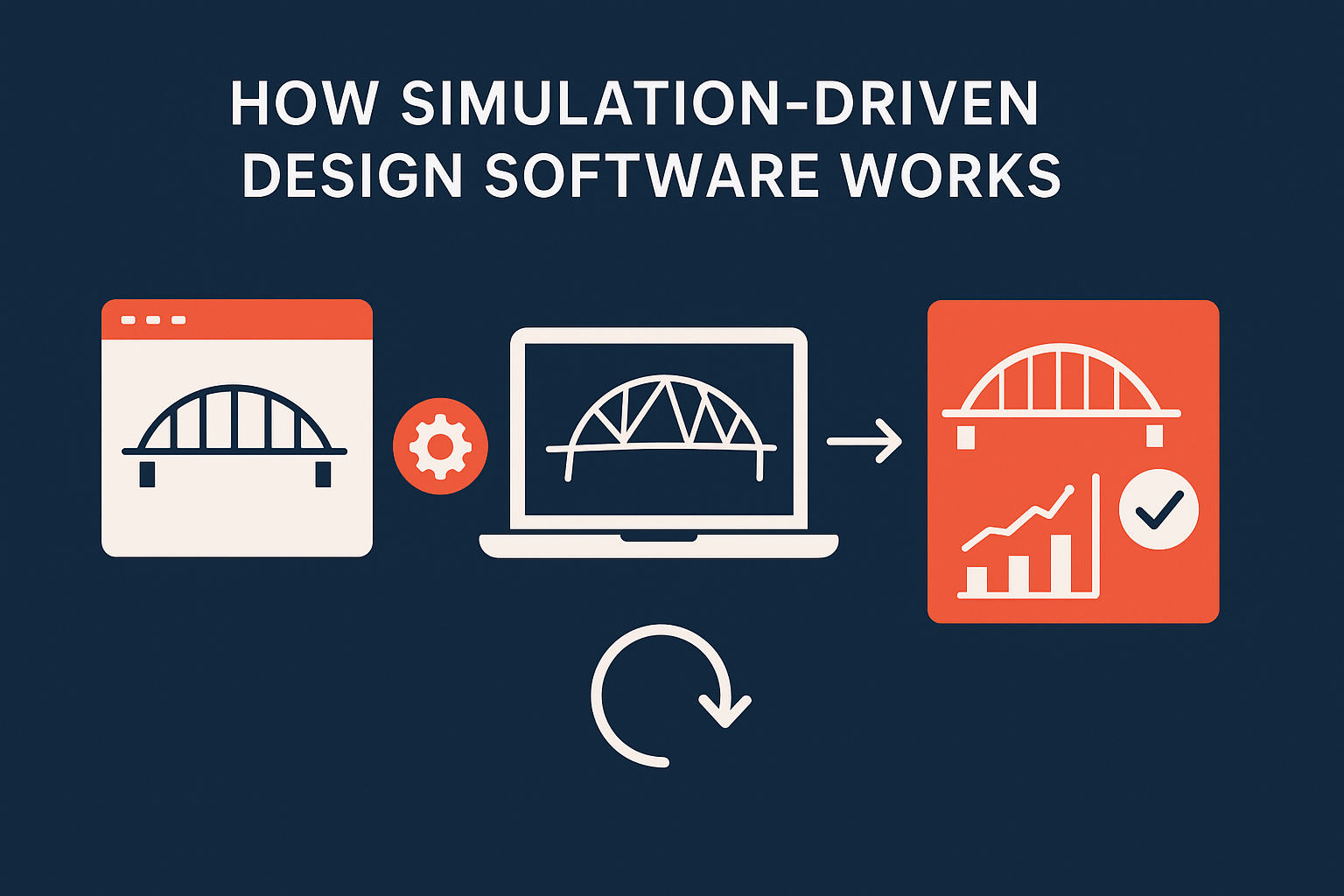
Simulation driven design software converts your initial design parameters into a digital model, then runs that model through physics-based calculations thousands of times with slight variations in each iteration. The software tests different material choices, structural configurations, and dimensional adjustments against real-world performance constraints like load capacity, deflection limits, and code requirements. Each variation gets scored on metrics you define, whether that's cost, carbon footprint, constructability, or a combination of factors.
The three-step automated process
First, the platform ingests your design inputs, whether that's a CAD file, a set of bridge plans, or basic project parameters like span length and load requirements. The system structures this data into a simulation-ready format, identifying which elements can be modified and which constraints must remain fixed. Second, the software generates thousands of design alternatives by systematically adjusting variables within acceptable engineering ranges. Third, it validates each option against structural codes and ranks results based on your optimization priorities.
Software that can test 10,000 bridge configurations in the time it takes to manually analyze three fundamentally changes what "optimized design" means.
What runs behind each iteration
Every simulation cycle applies finite element analysis to calculate how forces distribute through the structure under different load cases. The software checks girder stresses, pier reactions, and connection details against standards like AASHTO LRFD, flagging any configuration that fails compliance. Simultaneously, it calculates material quantities and cost estimates for each variation, giving you economic data alongside structural performance metrics before you commit to a specific design direction.
Key capabilities to look for in the software
Not all simulation platforms deliver the same level of functionality. You need tools that go beyond basic structural analysis and actually change how you make design decisions. The right simulation driven design software should automate the tedious validation work while giving you complete visibility into trade-offs between cost, performance, and constructability before you lock in a design direction.
Multi-objective optimization scoring
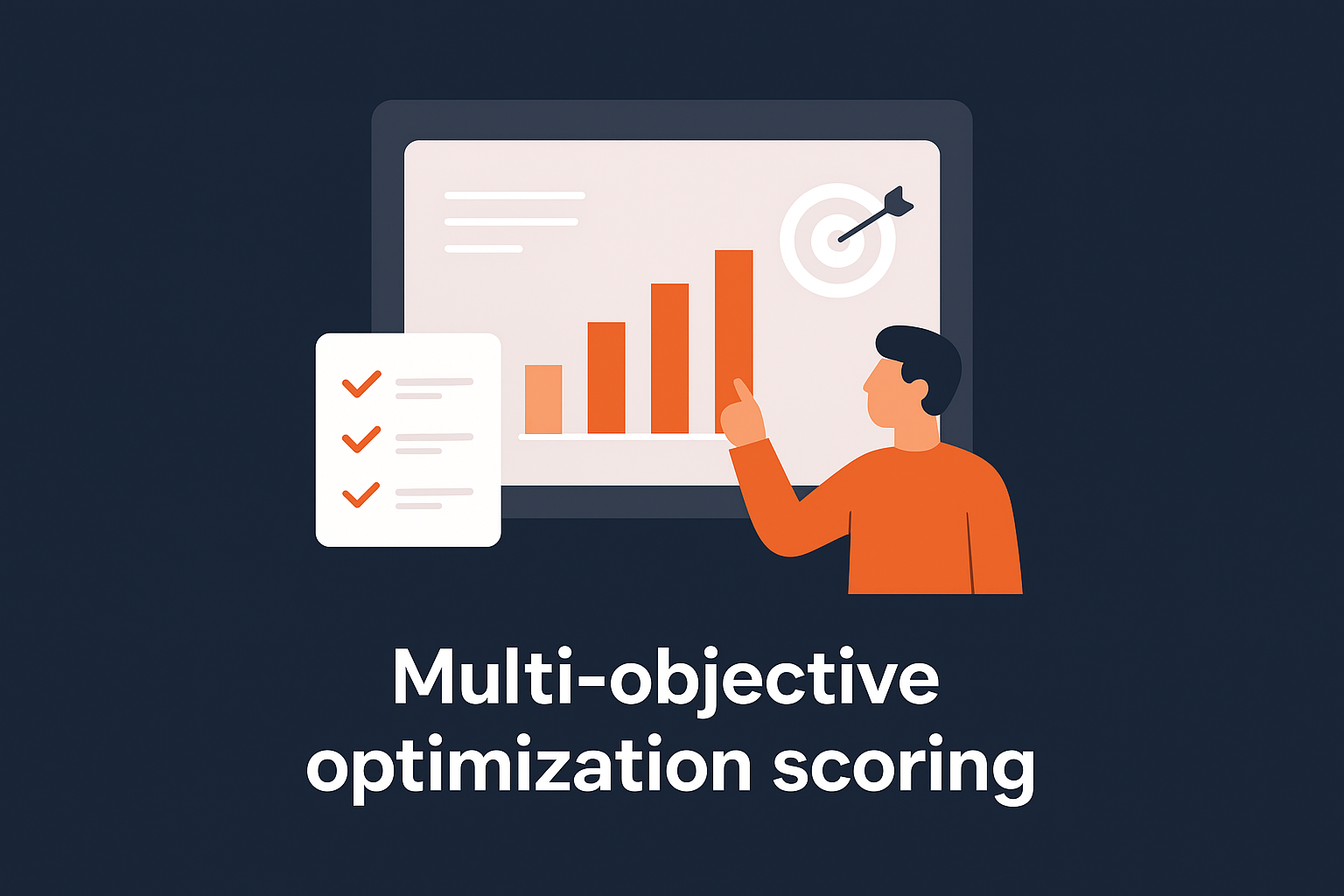
Your platform needs to evaluate every design variation against multiple criteria simultaneously, not just structural adequacy. Look for systems that score configurations on total lifecycle cost, carbon emissions, constructability complexity, and durability metrics in a single analysis run. This lets you see exactly what you're sacrificing when you choose a cheaper girder configuration or how much carbon reduction costs in additional material expenses.
Software that optimizes for only one variable at a time forces you to manually balance trade-offs that the system should handle automatically.
The best tools present this data in ranked result sets that show you the top ten options across different priority weights, making it obvious which design wins on cost versus which wins on sustainability without requiring separate analysis cycles.
Automated code compliance validation
Your simulation platform must verify every design iteration against relevant structural codes before presenting results. This means automated checks for AASHTO LRFD bridge standards, AISC steel design requirements, and local DOT specifications built directly into the evaluation loop. Systems that flag compliance failures during simulation rather than after manual review save you from wasting time on configurations that would never pass engineering approval.
How to evaluate and select the right tool
Start by testing the platform against your actual project data, not generic demos. Upload a recent bridge plan set or input real project parameters to see if the software can parse your documentation format and generate meaningful alternatives. If the tool struggles with your typical inputs during evaluation, it will create friction in production use. You need simulation driven design software that works with the file types and specification formats your team already produces.
Match capabilities to your workflow priorities
Identify which engineering decisions consume the most manual iteration time in your current process. If you spend weeks evaluating girder configurations, prioritize platforms with robust steel optimization modules. Teams that struggle with code compliance documentation should focus on tools that auto-generate validation reports matching your local DOT requirements. The software should eliminate bottlenecks you face today, not create new learning curves around features you won't use.
The best simulation platform for your firm solves the specific problems that currently delay your projects, not the theoretical problems vendor demos highlight.
Verify vendor support for your standards
Confirm the platform validates designs against the exact code versions your projects require. Some tools claim AASHTO compliance but only check outdated specifications or generic parameters rather than state-specific amendments your DOT mandates. Ask vendors for sample validation reports from projects similar to yours, and have your senior engineers review the compliance documentation format before committing to a subscription.
How to implement it in an engineering workflow
Start with a pilot project that represents your typical workload but has flexible timeline constraints. Select a bridge design where you can run simulation driven design software in parallel with your traditional process, comparing results without risking project deadlines. This approach lets your team validate the platform's outputs against familiar manual calculations while building confidence in automated recommendations.
Run parallel workflows during transition
Keep your existing design process running while the simulation platform analyzes the same project parameters. Assign one engineer to manage the software inputs and compare its optimized configurations against what your team produces manually. This side-by-side validation reveals where the platform adds value and where your engineers still need to apply judgment calls the software can't make. Document discrepancies so you understand which decisions remain human-dependent versus which the platform reliably handles.
Running parallel workflows prevents disruption while proving the software's reliability against your team's established standards.
Integrate simulation checkpoints into project phases
Build mandatory simulation reviews into your design workflow at specific milestones rather than treating the platform as an optional tool. Require optimization runs after initial concept approval and before final plan submittal, making automated validation a formal gate in your project schedule. This ensures simulation becomes standard practice rather than something engineers skip when deadlines tighten.
Practical next steps
Choose one upcoming project where simulation driven design software could reduce your bid risk and request access to platforms that match your technical requirements. Test each tool against your real project constraints rather than generic examples, and measure how much time the software saves compared to your manual workflow. Track which design decisions the platform handles reliably versus where your engineers still need to intervene with domain expertise.
For bridge infrastructure teams specifically, focus on platforms that automate the exact compliance checks your DOT requires and generate validation reports in formats your reviewers already accept. Your first simulation run shows you whether the platform delivers measurable advantages worth integrating into every project moving forward.
Have a package your team can’t get to? Send it to us. Our engineers check and sign off everything we deliver.