NYSDOT Bridge Manual 2025: Key Sections & What Changed
NYSDOT Bridge Manual: 2025 Edition Guide For Engineers
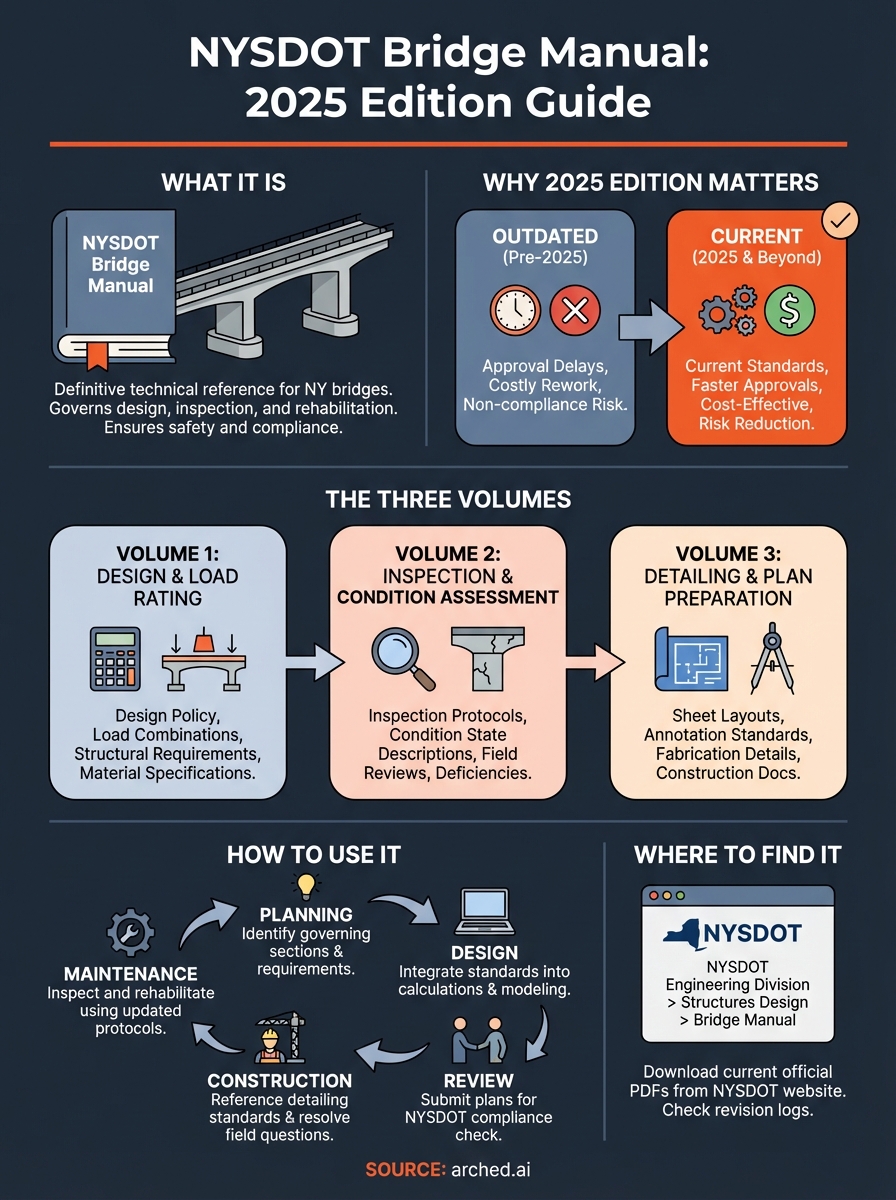
The NYSDOT Bridge Manual serves as the definitive technical reference for anyone designing, inspecting, or rehabilitating bridges within New York State. Updated to reflect current standards and practices, the 2025 edition consolidates design policies, load requirements, and inspection protocols that govern every phase of bridge project development, from preliminary engineering through construction and maintenance.
Whether you're preparing bid documents, running structural analyses, or coordinating with NYSDOT on a replacement project, having direct access to the correct manual edition matters. The guidelines dictate everything from load combinations to detailing requirements, and non-compliance can derail project approvals or create costly rework during construction.
This guide breaks down where to find the 2025 edition, what's inside each volume, and how engineers can apply these standards effectively. At Arched, we prepare estimates and BOQs for bridge and infrastructure bids, so understanding how these manuals structure design requirements is foundational to pricing compliant work accurately.
What the NYSDOT Bridge Manual is and who uses it
The NYSDOT Bridge Manual functions as the official technical standard for all bridge work involving state funding, oversight, or right-of-way in New York. It translates federal AASHTO requirements into state-specific policies that account for New York's climate, traffic patterns, and construction practices. Every design submission that crosses a NYSDOT desk gets checked against these volumes, making compliance non-negotiable for approval.
The manual's scope and authority
Three separate volumes divide the content by project phase. Volume 1 covers design policy and load rating procedures. Volume 2 addresses inspection protocols and condition assessment methods. Volume 3 provides detailing standards and plan sheet requirements. Together, they define everything from barrier rail profiles to seismic design categories across New York's diverse geography.
Each volume includes technical memoranda that clarify how to interpret specific clauses when edge cases arise during design. The manual establishes uniform expectations statewide, so engineers in Buffalo apply the same design criteria as teams working in the Hudson Valley or Long Island.
The manual sets the baseline that NYSDOT reviewers use to evaluate every structural calculation, material specification, and construction detail you submit.
Who relies on these standards
You'll use this manual if you're a structural engineer preparing bridge plans for state or local agencies. Contractors reference it during value engineering reviews to confirm that proposed alternates meet state policy. Inspectors apply the guidelines when rating existing structures and drafting rehabilitation scopes.
Regional DOT staff and consulting firms working on federally funded projects also depend on the nysdot bridge manual to align their work with New York's expectations. Municipal engineers coordinating with NYSDOT on locally owned structures keep current copies on hand, regardless of whether the project involves new construction, widening, or deck replacement.
Why the 2025 edition matters for New York projects
The 2025 edition carries immediate implications for any bridge project entering design or construction in New York State. NYSDOT requires that all submissions reference the most current manual version at the time of project initiation, which means plans developed under earlier editions may need revision before approval. The update incorporates recent federal regulation changes and addresses lessons learned from bridge failures and performance issues identified in recent inspection cycles.
Updated compliance requirements
Using outdated editions creates approval delays that push back your project timeline. NYSDOT reviewers flag discrepancies between your submittal and current policy, triggering revision requests that extend the review cycle by weeks or months. Contractors bidding on plans prepared under older standards face uncertainty around which specifications govern construction, increasing contingency pricing and project risk.
Projects initiated after January 2025 must demonstrate compliance with the current nysdot bridge manual edition to pass initial design review.
Avoiding costly rework
Design decisions locked in under previous editions can require structural modifications when NYSDOT applies current standards during final review. Changes to load factor combinations or material specifications after you've completed calculations mean redoing analyses and potentially adjusting member sizes. Staying current eliminates these retrofit costs and keeps your project on schedule.
What's inside the 2025 manual and what changed
The nysdot bridge manual divides its content across three distinct volumes that address different aspects of bridge project delivery. Volume 1 focuses on design policy and structural requirements, establishing load combinations, material specifications, and analysis methods. Volume 2 covers inspection procedures and condition assessment, detailing how you evaluate existing structures and document deficiencies. Volume 3 provides plan preparation standards and detailing requirements that govern what information appears on your construction documents.
Volume organization and coverage
Each volume operates as a standalone reference tied to a specific phase of bridge work. You'll find load rating procedures in Volume 1 alongside seismic design requirements and foundation design criteria. Volume 2 walks through element-level inspection protocols and establishes the condition state descriptions you'll apply during field reviews. Volume 3 prescribes sheet layouts, annotation standards, and the level of detail required for fabrication drawings.
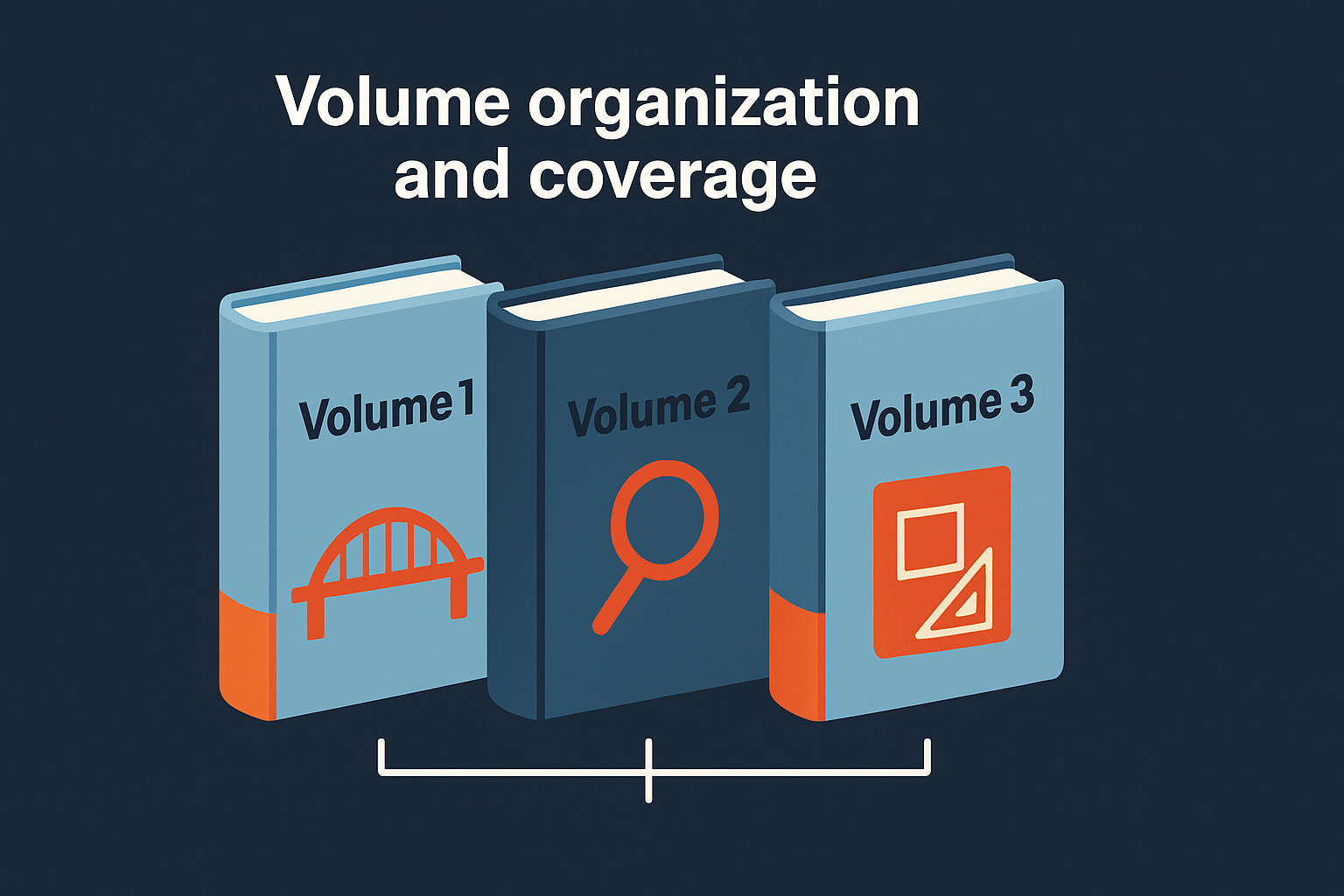
The three-volume structure lets you grab the specific technical guidance you need without wading through unrelated content.
Key revisions in this edition
The 2025 update introduces revised wind load provisions that align with recent AASHTO amendments and adjust design wind speeds across New York's exposure categories. NYSDOT also clarified scour analysis requirements for stream crossings based on updated flood frequency data. Material specifications now reference the latest ASTM standards, and several technical memoranda from previous editions got incorporated directly into policy text.
How to find the official manual and confirm it's current
NYSDOT hosts the official nysdot bridge manual through its Engineering Division webpage, where you'll download the most recent edition as separate PDF files for each volume. Navigate to the NYSDOT website and locate the Structures Design section under the Engineering tab to access the current manual set. The department updates these files directly when revisions occur, so checking this source ensures you're working from the correct version.
Accessing the official source
You'll find the manual by visiting NYSDOT's main site and navigating to Engineering > Structures > Bridge Manual. Each volume downloads independently, which lets you grab only the sections you need for your current project phase. The file names include edition dates that confirm which version you're viewing.
Always download fresh copies from NYSDOT's site rather than relying on files saved months earlier, since technical memoranda and clarifications get posted between major edition releases.
Confirming edition currency
Check the cover page and revision log inside each volume to verify the edition date matches what NYSDOT's website lists as current. The department posts announcements when new editions release, but cross-referencing the publication date on your downloaded file against their online listing prevents using outdated materials during project development.
How to use the manual in design, review, and construction
The nysdot bridge manual functions as your active reference throughout project delivery, not just a document you consult once during preliminary design. You'll reference specific sections at different project milestones, from establishing initial load cases through verifying fabrication details before construction begins. Engineers apply Volume 1 standards when developing structural calculations, while reviewers check submittals against the same criteria to confirm compliance.
Integrating manual requirements into your workflow
Start by identifying which manual sections govern your specific bridge type and project scope during the planning phase. Extract the applicable load combinations, material specifications, and detailing requirements that affect your structural system early, then build your calculation packages around these parameters. This prevents discovering conflicts between your preliminary design and NYSDOT standards during formal review.
During construction, contractors reference Volume 3 detailing standards to interpret plan notes and resolve field questions about connection details or material substitutions. Inspection teams apply Volume 2 protocols when documenting as-built conditions and verifying that constructed elements match approved plans.
Treat the manual as a living checklist that you revisit at each decision point rather than a one-time reference you consult and set aside.
Next steps
Keeping current copies of the nysdot bridge manual accessible throughout your project prevents compliance gaps that derail approval timelines. Set calendar reminders to check NYSDOT's Engineering Division page quarterly for technical memoranda or edition updates that affect projects in your pipeline. This proactive approach catches policy changes before they impact your work.
Apply the manual's requirements during preliminary design rather than waiting until formal submittal, which reduces revision cycles and keeps projects moving. Download all three volumes even if your current scope only touches one phase, since cross-references between design standards and inspection protocols clarify ambiguous requirements.
Have a package your team can’t get to? Send it to us. Our engineers check and sign off everything we deliver.