TxDOT Bridge Design Manual: LRFD Standards and How to Use
TxDOT Bridge Design Manual: LRFD Standards and How to Use
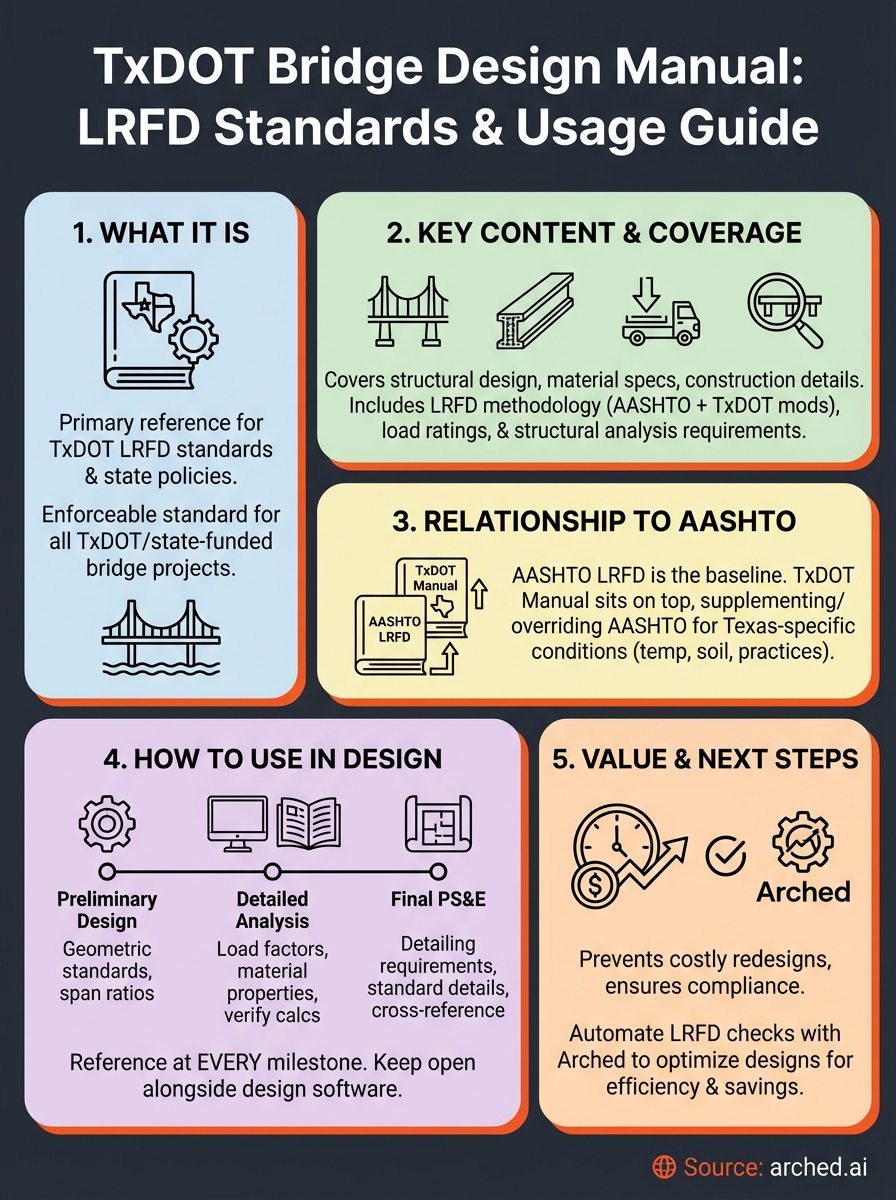
If you're designing or bidding on bridge projects in Texas, the TxDOT Bridge Design Manual is your primary reference for LRFD standards and state-specific design policies. This document, maintained by the Texas Department of Transportation, consolidates the engineering requirements that every bridge project in the state must meet, from geometric constraints to load combinations and material specifications.
Understanding and applying these standards efficiently can make or break a project's timeline and budget. That process starts with knowing exactly what the manual requires.
This guide breaks down what the TxDOT Bridge Design Manual covers, how to access the latest version, and how to apply its standards effectively in your bridge design and bidding workflow.
What the TxDOT Bridge Design Manual covers
The TxDOT Bridge Design Manual provides comprehensive guidance on structural design, material specifications, and construction details for all bridge types under state jurisdiction. You'll find requirements for steel, concrete, and timber structures, along with specialized sections covering load and resistance factor design (LRFD) methodology that aligns with AASHTO standards while incorporating Texas-specific modifications.
The manual serves as the enforceable bridge design standard for all TxDOT projects and local government work receiving state or federal funding.
Design standards and specifications
Your design process starts with the manual's geometric and structural requirements, which define minimum clearances, roadway widths, and load paths for both new construction and rehabilitation. The manual specifies design load combinations based on AASHTO LRFD, but includes Texas-specific factors for temperature ranges, soil conditions, and seismic zones. You'll reference these sections when establishing your preliminary beam layouts, pier spacing, and foundation types. The manual also addresses serviceability limits for deflection, vibration, and cracking that go beyond basic strength checks.
Load ratings and structural analysis requirements
When you prepare Plans, Specifications, and Estimates (PS&E), the txdot bridge design manual requires specific load rating calculations for both inventory and operating levels. Your structural analysis must account for live load distribution, impact factors, and multi-presence considerations outlined in the manual's load rating chapter. The document includes detailed procedures for evaluating existing bridges during rehabilitation, with methods for assessing deteriorated members and calculating reduced capacities. These requirements ensure that every bridge you design or evaluate meets consistent safety standards across the state's infrastructure network.
Where the manual fits in Texas bridge standards
The txdot bridge design manual sits at the top of the design hierarchy for bridge projects in Texas, establishing state-specific requirements that supplement and sometimes override national AASHTO LRFD standards. You'll use this manual alongside the TxDOT Standard Specifications for Construction and Maintenance of Highways, Streets, and Bridges, which covers construction methods and material testing. When conflicts arise between documents, the Bridge Design Manual takes precedence for structural design decisions.
The manual functions as TxDOT's primary enforcement tool for ensuring consistent bridge design practices across all state-funded projects.
Relationship to AASHTO standards
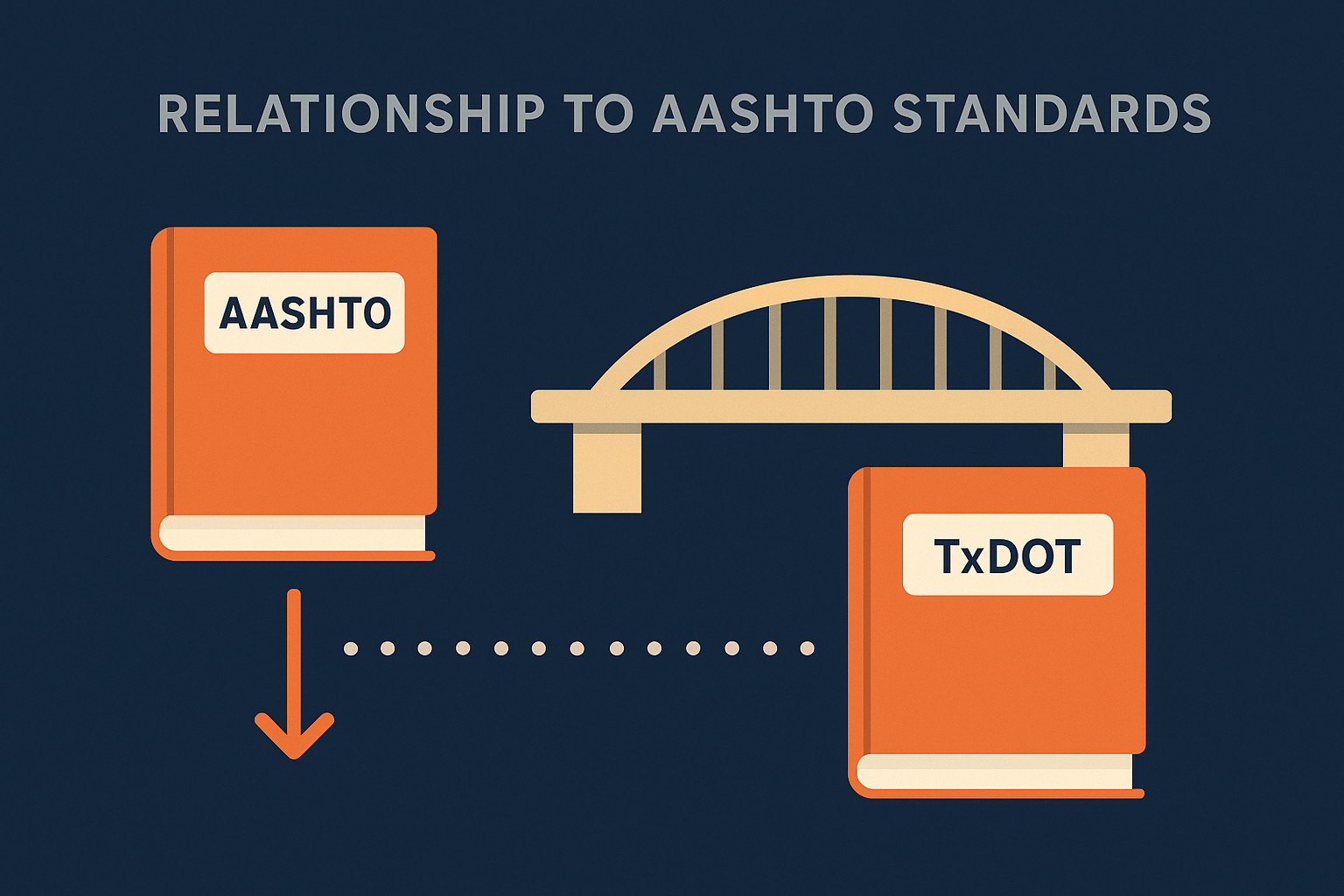
Your design process starts with AASHTO LRFD Bridge Design Specifications as the baseline, but the TxDOT manual modifies these national standards to address Texas-specific conditions like temperature extremes, soil types, and regional construction practices. The manual explicitly identifies which AASHTO provisions apply unchanged and which sections require Texas modifications. You'll find that load factors, material grades, and geometric constraints often differ from pure AASHTO requirements to reflect local performance data.
Integration with construction specifications
Beyond structural requirements, the manual works in tandem with TxDOT's construction specifications, which define material testing protocols and installation procedures. Your structural calculations reference the manual's design requirements, while your construction documents cite the Standard Specifications for quality control and acceptance criteria.
How to find the right edition and updates
You can access the current TxDOT Bridge Design Manual directly from the TxDOT Bridge Division website, which maintains the official electronic version that supersedes any printed copies. The manual undergoes regular updates through formal revision processes, and you need to verify you're working with the correct edition before starting any design calculations. Using an outdated version can result in code violations, rejected submittals, and costly redesign work.
Always confirm your manual version matches the edition specified in your project's contract documents and special provisions.
Locating the official download
Your first step is navigating to TxDOT's Bridge Division page under the Engineering section of their website, where you'll find the manual listed in the publications directory. The file typically downloads as a PDF with searchable text and bookmarked chapters, making it easier to reference specific sections during design. Each edition includes a cover page showing the effective date and revision number, which you should record in your project documentation for quality control purposes.
Tracking revisions and errata
TxDOT publishes revision notices separately from the full manual when updates affect only specific chapters or sections. You need to check for these interim updates before finalizing your PS&E package, as they may modify load factors, material specifications, or design procedures without triggering a complete manual reissue.
How to use the manual during design and PS&E
You should reference the txdot bridge design manual at every major design milestone, from preliminary beam selection through final PS&E package preparation. Your workflow starts with the manual's load and geometry chapters to establish your design envelope, then progresses to detailed member checks using the structural analysis sections. Keep the manual open alongside your calculation software rather than treating it as a one-time reference, since you'll need to verify load factors, material properties, and detailing requirements throughout your design process.
Early design phase application
During preliminary design, you'll extract minimum span-to-depth ratios, clearance requirements, and bearing types from the manual's geometric standards section. Your preliminary beam layouts must satisfy the manual's load distribution methods before you begin detailed analysis. This approach prevents wasted effort on configurations that won't meet TxDOT's fundamental requirements.
Your preliminary design decisions directly determine whether your final calculations will align with TxDOT standards or require costly revisions.
Final PS&E package preparation
When assembling your PS&E submittal, you'll cross-reference the manual's detailing requirements for concrete cover, rebar spacing, and connection details. Your structural drawings must match the manual's standard details and notation conventions to pass TxDOT's review process without revision requests.
Common lookups and quick navigation tips
You'll return to certain sections of the txdot bridge design manual repeatedly during your design work, so knowing how to find them quickly saves considerable time. The manual's bookmark structure and searchable PDF format let you jump directly to specific requirements instead of scrolling through hundreds of pages. Setting up your own reference system for frequently used tables and formulas will speed up your calculation workflow significantly.
Most-referenced sections
Your daily design work will pull you back to the load combination tables and resistance factor charts more than any other content. These sections contain the multipliers you'll apply to every structural calculation, from preliminary beam sizing through final connection design. The standard details chapter becomes essential when you're preparing construction drawings, as it shows TxDOT's preferred configurations for bearings, expansion joints, and railing systems.
Bookmarking these high-use sections in your PDF reader can reduce your lookup time by 70% or more.
Using bookmarks and search functions
Your PDF reader's bookmark panel mirrors the manual's table of contents, letting you navigate to any chapter with a single click. When you need a specific term or code reference, the search function locates every instance throughout the document. Create your own quick-reference sheet listing page numbers for load tables, material properties, and geometric constraints you use most often.
Next steps after you understand the manual
Once you've familiarized yourself with the txdot bridge design manual's requirements, your next priority is applying those standards efficiently across your project pipeline. Your design workflow should integrate the manual's load combinations and geometric constraints from day one to avoid late-stage redesign work. Building this discipline into your process ensures every calculation aligns with TxDOT's expectations before you submit your PS&E package.
Knowing the manual is the foundation, but bridge work still has to be priced. If you are bidding a bridge project and need a detailed estimate, Arched can prepare it: send us the drawings and we deliver a priced BOQ reviewed by an engineer. See how our estimating service works
Have a package your team can’t get to? Send it to us. Our engineers check and sign off everything we deliver.