Optimizing Bridge Designs with Generative Engineering
How parametric simulation explores thousands of structural variations to find cost-efficient, code-compliant bridge designs — automatically.
The Problem with Traditional Bridge Design
Most bridge designs are optimized by hand. An engineer selects a configuration based on experience, runs a handful of checks, and moves forward. It works — but it leaves margin on the table.
The typical design-bid-build workflow looks like this:
- Owner issues plans (PDF)
- Contractor prices the design as-is
- Maybe one or two value engineering ideas get floated
- Everyone moves on
The problem? There are thousands of viable structural configurations for any given bridge. Manual exploration covers a fraction of them.
What Generative Engineering Changes
Generative engineering flips the process. Instead of starting with one design and tweaking it, you start with constraints and let simulation find the optimal configuration.
Here is what that looks like in practice:
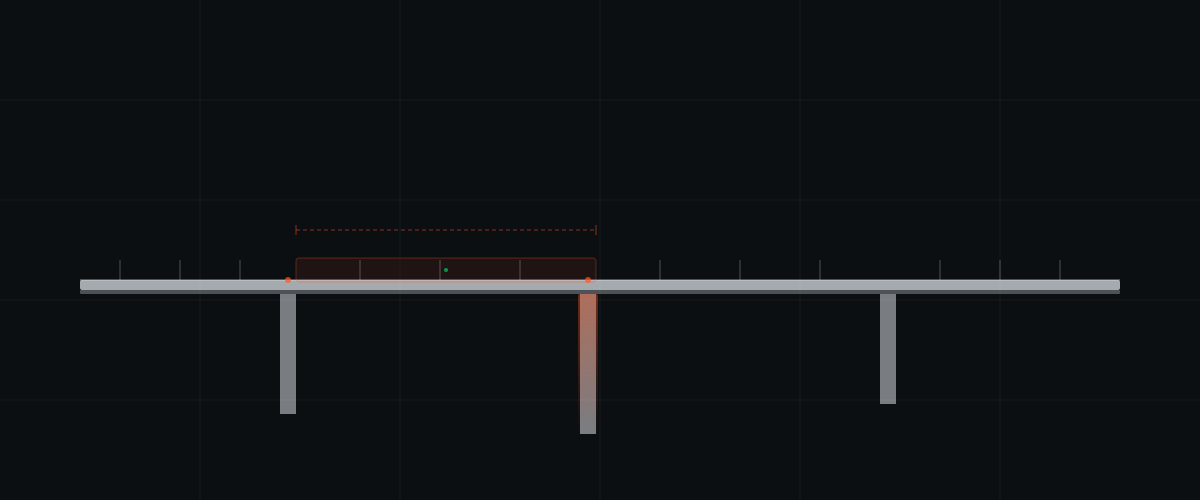
- Input: A plan set — beam counts, span lengths, pier depths, material specs
- Process: Thousands of parametric variations are generated and stress-tested
- Output: A ranked set of validated alternatives, each scored on cost, carbon, and constructability
Every variant undergoes full AASHTO LRFD code verification. Designs that fail any check are eliminated automatically. What remains is a curated set of options that are structurally sound, code-compliant, and optimized for your priorities.
Real Savings, Real Projects
On a recent three-span prestressed concrete bridge, generative optimization identified a configuration that reduced material costs by 12% while maintaining full AASHTO compliance. The winning design used a different beam spacing and depth combination that no engineer had considered — because the design space was simply too large to explore manually.
These are not theoretical savings. They show up in:
- Material costs — less concrete, less steel, fewer piers
- Construction time — simpler configurations mean faster builds
- Carbon footprint — less material means less embodied carbon
- Lifecycle cost — optimized designs often have lower maintenance requirements
The Engineer Stays in the Loop
Generative engineering does not replace engineering judgment. It augments it. The simulation narrows thousands of options down to a handful of validated candidates. The engineer reviews the results, applies project-specific knowledge, and makes the final call.
Getting Started
If you are bidding on bridge projects and want to find margin before you submit, generative engineering is the fastest path to validated savings. Send us a plan set and we will return an optimization report showing exactly where the opportunities are.