WSDOT Bridge Design Manual: M 23-50 Revisions Explained
WSDOT Bridge Design Manual: M 23-50 Revisions Explained
The WSDOT Bridge Design Manual (M 23-50) is the definitive reference for engineers designing bridge and highway structures in Washington State. Whether you're bidding on a state project or verifying design compliance, understanding these specifications directly impacts your project's approval and bottom line.
Recent revisions to M 23-50 reflect updated safety standards, material specifications, and analysis methods aligned with AASHTO LRFD guidelines. Staying current with these changes isn't optional, it's essential for code compliance and competitive positioning. Missing a single revision can mean rejected submittals or expensive redesigns mid-project.
This article breaks down the structure and key components of the WSDOT Bridge Design Manual, explains what the latest revisions mean for your designs, and covers practical compliance considerations.
What the WSDOT Bridge Design Manual is
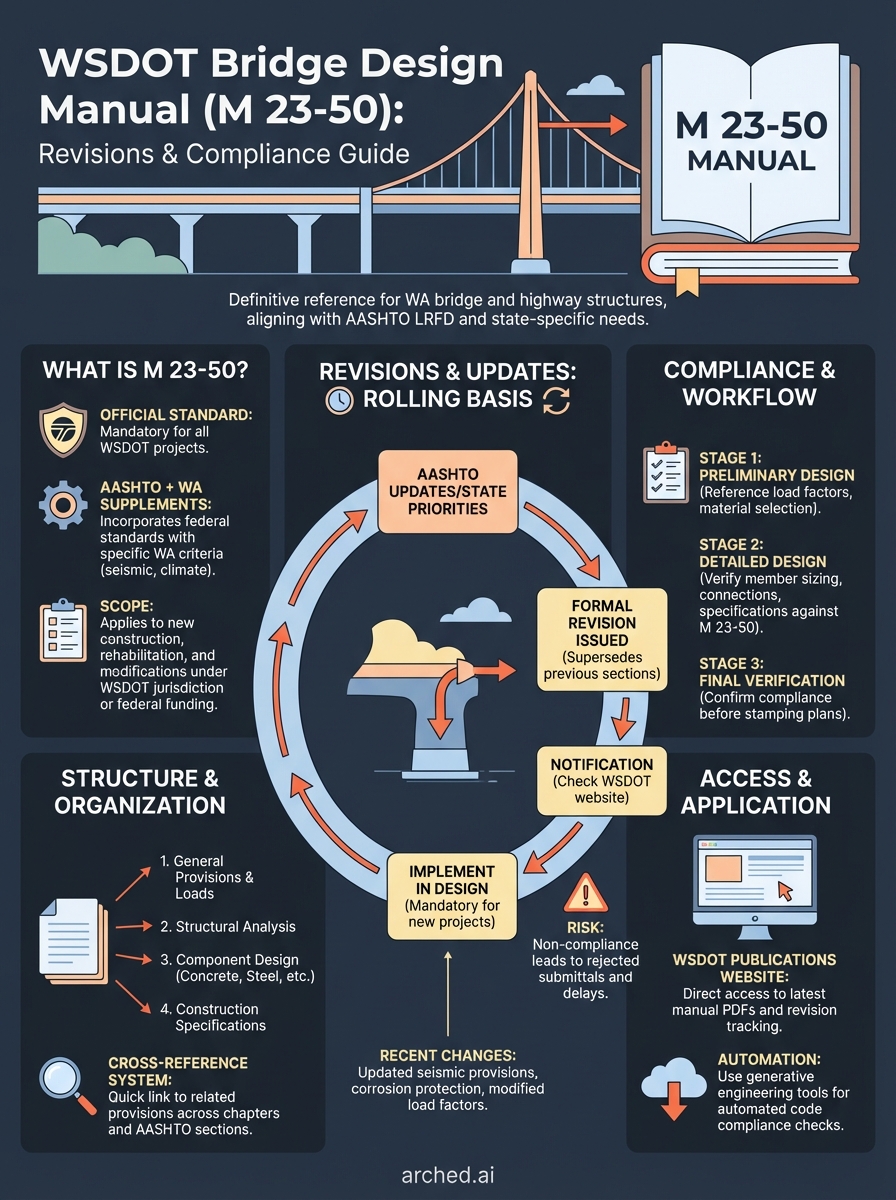
The WSDOT Bridge Design Manual serves as Washington State's official engineering standard for all bridge and highway structures constructed under state jurisdiction. This document translates federal AASHTO LRFD requirements into state-specific criteria that account for Washington's unique seismic activity, climate conditions, and infrastructure priorities. You reference M 23-50 whenever you design, analyze, or bid on a bridge project that involves WSDOT oversight or funding.
Authority and regulatory scope
WSDOT publishes M 23-50 under the authority of the Washington State Department of Transportation, making compliance mandatory for projects on state routes and structures receiving state or federal highway funding. Your design must meet both AASHTO baseline standards and Washington's supplemental requirements outlined in this manual. Local agencies often adopt M 23-50 provisions for their own projects, extending its influence beyond strictly state-controlled infrastructure.
M 23-50 acts as the bridge between federal design standards and Washington's specific engineering requirements.
Engineers working on any WSDOT-administered contract face direct consequences for non-compliance, including rejected submittals and contract delays. The manual establishes the minimum acceptable criteria rather than suggested best practices, so treating it as optional guidance exposes your firm to liability and approval bottlenecks.
When M 23-50 applies to your project
You must follow the wsdot bridge design manual when designing new bridge construction, bridge rehabilitation, or structural modifications on any WSDOT-maintained facility. The manual also applies when you're working on locally owned bridges that receive federal-aid highway program funding or connect to the state highway system. Even if you're handling a city or county project, checking M 23-50 requirements protects you from conflicts during the approval process.
Projects entirely on local roads with no state funding may use M 23-50 as guidance rather than strict regulation, but most engineers treat it as the standard reference regardless of funding source. Your liability and professional responsibility often make voluntary compliance the practical choice even when technically optional.
What's inside M 23-50 and how it's organized
The wsdot bridge design manual follows a systematic chapter structure that mirrors AASHTO LRFD organization while adding Washington-specific requirements throughout. You'll find load calculations, material specifications, design procedures, and construction details organized by structural component and analysis type. This layout lets you jump directly to the section relevant to your design task without reading the entire manual cover to cover.
Major divisions and technical chapters
M 23-50 divides into general provisions, loads and load factors, structural analysis methods, and component-specific design chapters for concrete, steel, foundations, and bearings. Each chapter references corresponding AASHTO sections while calling out where Washington modifies or supplements federal standards. You'll encounter chapters dedicated to seismic design, bridge railings, deck design, and construction specifications that reflect regional priorities like earthquake resistance and corrosion protection.
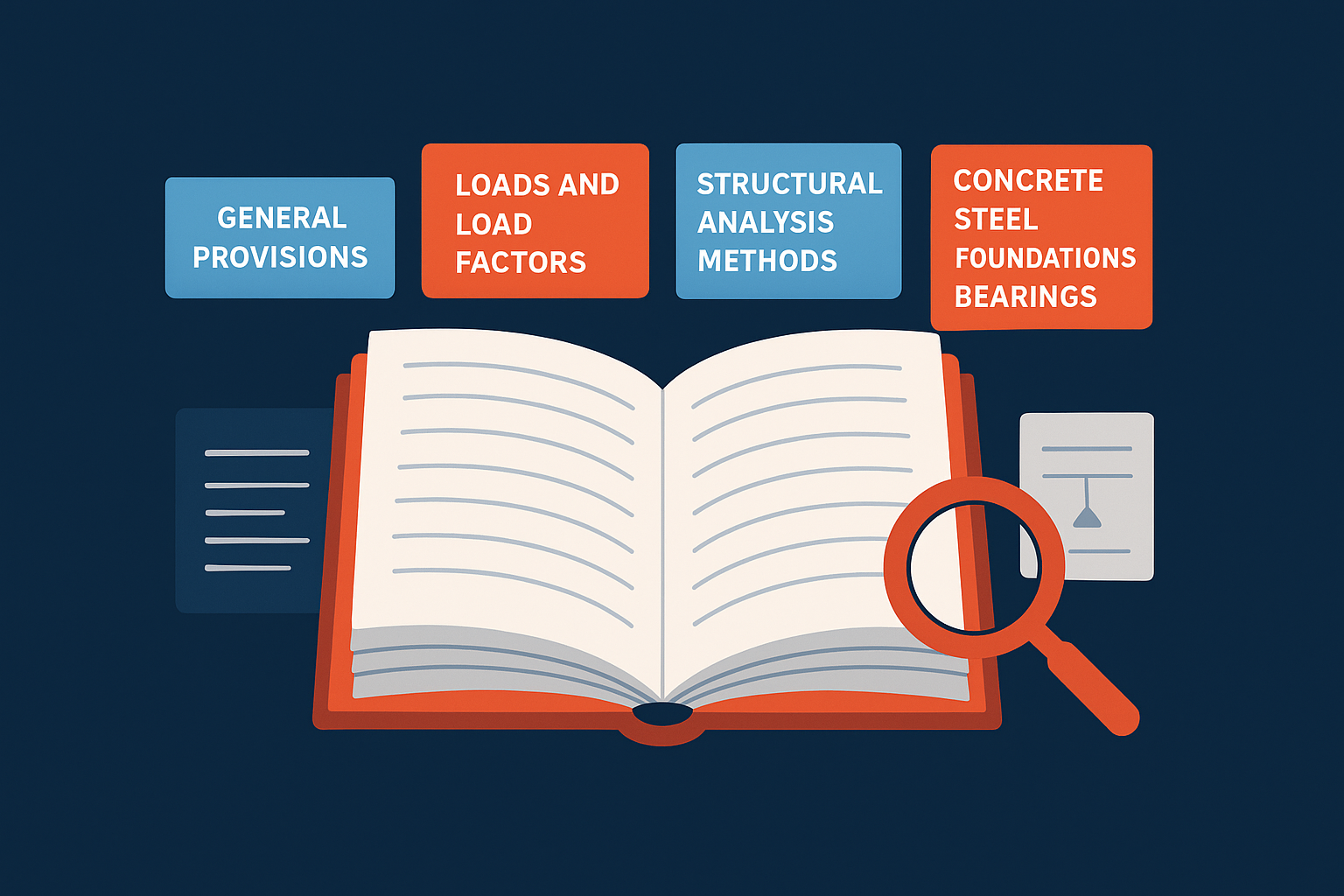
The manual's structure matches your design workflow, letting you verify requirements as you progress through each phase.
Finding specific requirements quickly
WSDOT includes a comprehensive index and cross-reference system that links related provisions across chapters. When you need load combination factors for seismic design, the index directs you to both the loads chapter and seismic design sections simultaneously. Tables, figures, and equations carry consistent numbering that matches AASHTO references, reducing confusion when you're comparing federal and state requirements side by side.
How M 23-50 revisions work and what changed
WSDOT updates the wsdot bridge design manual on a rolling basis rather than following a fixed annual schedule. When federal AASHTO standards change or Washington's engineering priorities shift, the agency issues formal revisions that supersede previous sections. You receive notification through WSDOT's distribution system if you're registered, but the responsibility for tracking current requirements falls on your engineering firm.
Revision frequency and notification process
Revisions typically occur when new AASHTO editions release or when Washington identifies gaps in existing provisions. WSDOT publishes revision notices on their website and distributes updates to registered engineers and consultants. You should verify the effective date before starting any new design, as projects initiated after a revision date must comply with updated criteria. Earlier projects may continue under previous standards depending on contract timing.
Tracking revision dates protects you from submitting non-compliant designs under outdated criteria.
Recent significant changes
Recent M 23-50 revisions incorporated updated seismic design provisions and modified load factor combinations for extreme event scenarios. Changes also addressed corrosion protection requirements for steel structures in marine environments, reflecting Washington's coastal bridge inventory. Your designs now need enhanced detailing for connections and joints that previously met minimum standards under older versions.
How to find the current M 23-50 on WSDOT's site
Accessing the official wsdot bridge design manual requires navigating to WSDOT's publications database rather than general search pages. You can reach the current M 23-50 directly through the WSDOT website's engineering manuals section, where the agency maintains downloadable PDFs and revision tracking. Bookmark this page because you'll reference it throughout your project lifecycle.
Direct access through WSDOT publications
Navigate to the WSDOT website and locate the Engineering Publications section under the "Doing Business" or "Design" menu. The site organizes manuals by publication number, so searching for "M 23-50" or "Bridge Design Manual" returns the current version. WSDOT typically provides both the complete manual and individual chapter downloads, letting you grab specific sections without downloading hundreds of pages. You'll find the latest effective date displayed prominently on the main document page.
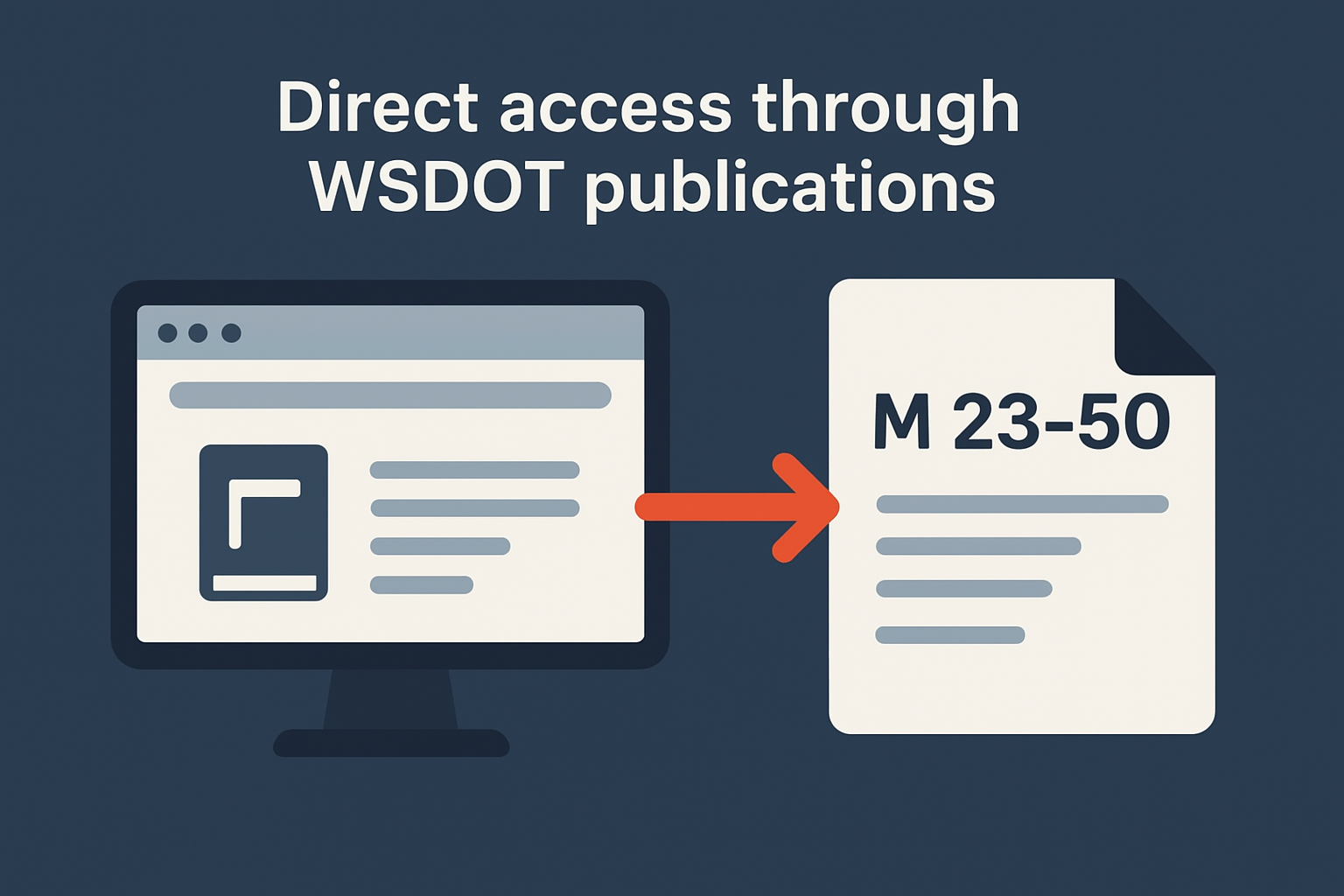
Always verify the effective date matches your project's design start date to ensure compliance.
Verifying you have the latest version
Check the revision date printed on the cover page and compare it against the publication date listed on WSDOT's website. Your downloaded copy should show the same month and year as the online listing. WSDOT occasionally issues interim revisions between major updates, so reviewing the errata or addendum section protects you from outdated specifications that could invalidate your design.
How to apply M 23-50 in a bridge design workflow
Integrating the wsdot bridge design manual into your design process requires systematic verification at multiple project stages rather than waiting until final submittal. You reference M 23-50 during preliminary design for load assumptions, material selection during detailed engineering, and final compliance verification before stamping plans. This staged approach catches specification conflicts early when changes cost less to implement.
Reference checking during preliminary design
Start your preliminary design by pulling applicable load factors and load combinations directly from M 23-50's loads chapter. You'll establish your design basis by confirming which AASHTO provisions Washington has modified and which state-specific supplements apply to your structure type. This initial review prevents major redesign later when you discover Washington requires stricter seismic detailing or different live load distributions than baseline AASHTO standards.
Early M 23-50 verification eliminates costly mid-project design changes that delay schedules and erode margins.
Code verification at detailed design stage
During detailed design, you cross-reference every structural calculation against M 23-50 requirements for member sizing, connection details, and material specifications. Your structural analysis software may default to generic AASHTO criteria, so manually verify that Washington's supplemental provisions for seismic design, corrosion protection, and serviceability limits appear in your calculations. Document which M 23-50 sections govern each design decision to streamline WSDOT's review process and demonstrate compliance.
Next steps with WSDOT bridge guidance
Staying current with the wsdot bridge design manual protects your firm from compliance failures and maintains your competitive position during the bidding process. You should register for WSDOT's notification system to receive automatic alerts when revisions publish, and bookmark the publications page for quick access during active projects. Your engineering team needs a systematic verification process that checks every design element against both AASHTO baseline requirements and Washington's state-specific provisions outlined in M 23-50. Document your compliance approach for each project to streamline WSDOT's review process.
Manual code verification consumes significant engineering hours, especially when you're evaluating multiple design alternatives to optimize both cost and constructability. If you are bidding a bridge package, Arched can prepare the estimate and BOQ from your drawings, reviewed by an engineer. See how our estimating service works.
Have a package your team can’t get to? Send it to us. Our engineers check and sign off everything we deliver.