5 Urban Infrastructure Projects In India To Track In 2026
Track 5 major urban infrastructure projects in India for 2026. Get insights on Smart City O&M, Metro expansions, and bidding for high-value tenders.
India is channeling record capital expenditure into urban infrastructure projects in India, with the 2026-27 Union Budget allocating over ₹11 lakh crore to infrastructure alone. From metro expansions and expressway corridors to industrial townships and smart city upgrades, the pipeline of active and upcoming projects is stacking up fast, and so is the volume of associated government tenders hitting portals like GeM, CPPP, and state e-procurement sites every single day.
For infrastructure firms and BD teams, tracking these mega-projects isn't just about staying informed. It's about spotting contract opportunities early enough to actually compete for them. Each project on this list generates hundreds of sub-contracts across design, construction, consultancy, and procurement, many of which go unnoticed because they're buried across dozens of portals. That's exactly the problem Arched is built to solve, using AI to monitor 500+ government portals and match tenders to your firm's specific credentials and experience.
Here are five major urban infrastructure projects worth tracking in 2026, what stage they're at, and why they matter for your pipeline. Whether you're bidding today or building qualifications for larger contracts down the line, these are the programs shaping where the work is headed.
1. Arched.ai urban infrastructure opportunity tracker
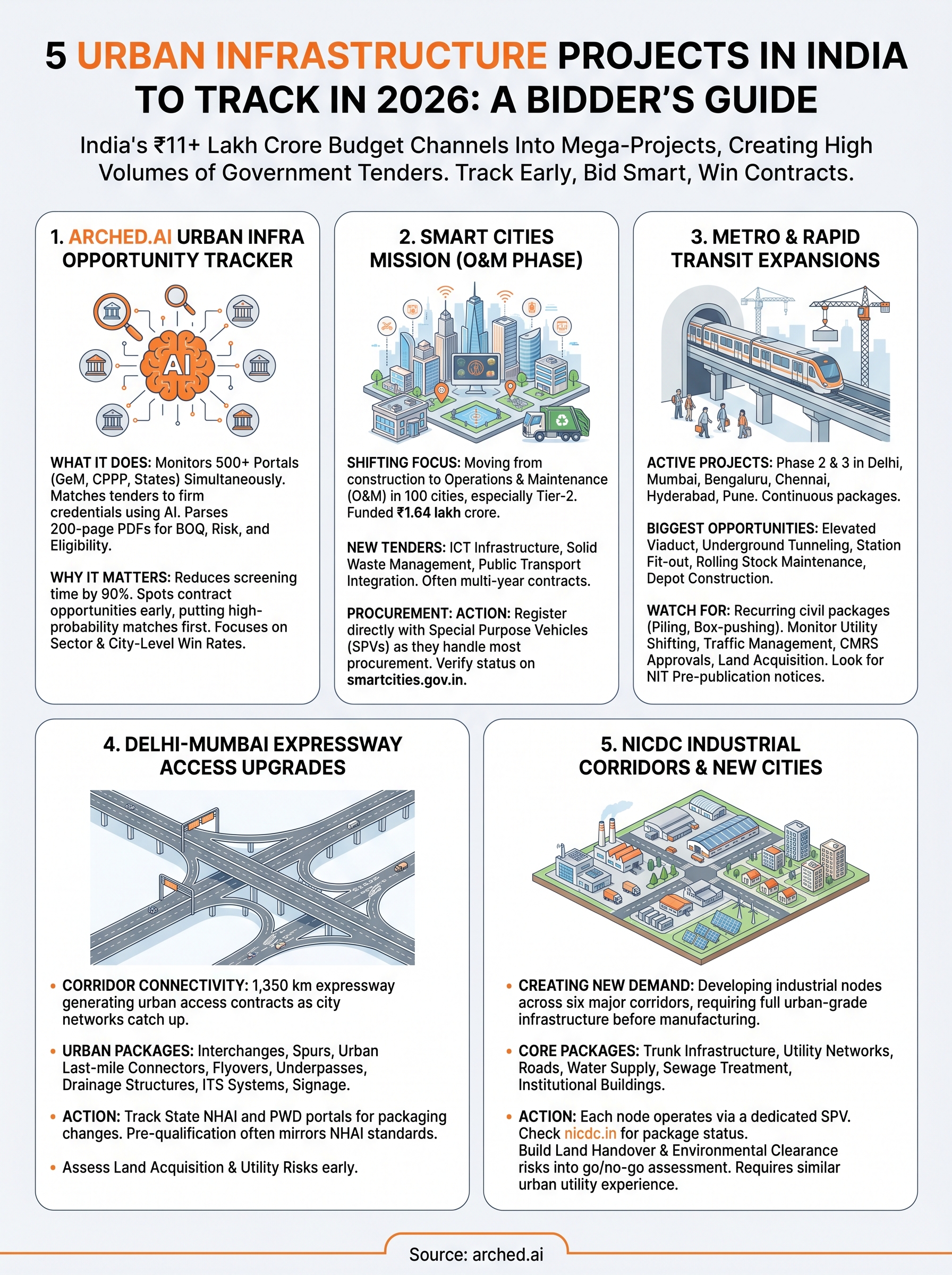
Arched monitors over 500 government portals simultaneously, including GeM, CPPP, IREPS, MSTC, and state e-procurement platforms, so your BD team doesn't have to manually refresh each one. It covers the full range of tenders generated by the largest urban infrastructure projects in India, from mega-corridors to city-level systems contracts.
What it tracks for urban infrastructure teams
The platform pulls active tenders, corrigenda, and deadline changes across civil works, consultancy, equipment supply, and systems integration. For urban programs specifically, it covers metro rail packages, smart city contracts, expressway sub-works, and industrial node utilities, giving your team a single consolidated view instead of scattered portal alerts.
How its matching differs from keyword tender alerts
Standard keyword alerts return irrelevant results. Arched maps each tender against your firm's actual credentials, past project values, and certifications to surface only the opportunities you're genuinely eligible for. This filters out the noise and puts high-probability matches at the top of your queue first.
Eligibility-based matching reduces the time your BD team spends screening tenders by up to 90%, according to Arched's internal benchmarks.
What to review before bidding on an urban project
Arched's document parsing engine reads full tender PDFs and extracts the BOQ, qualification criteria, and unusual risk clauses automatically. Your team sees the critical numbers and conditions without reading 200-page notices cover to cover before deciding whether to pursue a package.
How to monitor competitors and win rates by city and agency
The centralized dashboard shows historical win rates segmented by city, agency, and project type. You can track which firms are winning packages in specific corridors and use that data to focus on sectors where your conversion rate is strongest.
Where it fits in a 2026 pursuit workflow
Use Arched at the top of your funnel to discover and screen opportunities, then move qualified tenders into your bid management process. The platform's gap analysis feature also flags the credentials you need to qualify for larger contracts later in the year.
2. Smart Cities Mission projects moving into operations
The Smart Cities Mission has funded over 8,000 projects worth ₹1.64 lakh crore across 100 cities. Many of these urban infrastructure projects in India are now shifting from construction into operations, which opens a fresh layer of contracts for firms with the right profile.
What is still getting built versus what is in O&M
Most civil and structural works are complete or in final stages. Active construction is concentrated in tier-2 cities that faced execution delays, particularly around integrated command centers and drainage upgrades.
The urban systems most likely to see new tenders in 2026
ICT infrastructure, solid waste management, and public transport integration are producing the most new procurement activity. Cities completing phase-one builds are now issuing multi-year O&M contracts alongside residual civil packages.
Implementing agencies and common procurement routes
Special Purpose Vehicles handle most Smart Cities procurement, often through city-specific portals rather than central platforms. Your team should register directly with each SPV to receive tender notifications.
Typical eligibility requirements that filter bidders out
Most packages require prior experience in urban systems and minimum annual turnover at 2x to 3x the contract value. Firms without documented O&M experience often get screened out at the pre-qualification stage.
Cross-check project status on the Smart Cities Mission dashboard before committing bid preparation resources, since many portals carry outdated notices.
How to verify status updates and avoid outdated information
Your safest source is the official smartcities.gov.in dashboard, which tracks project progress at the city and component level. Pair that with direct SPV portal checks to catch tenders that never reach central procurement platforms.
3. Metro and rapid transit expansions in major cities
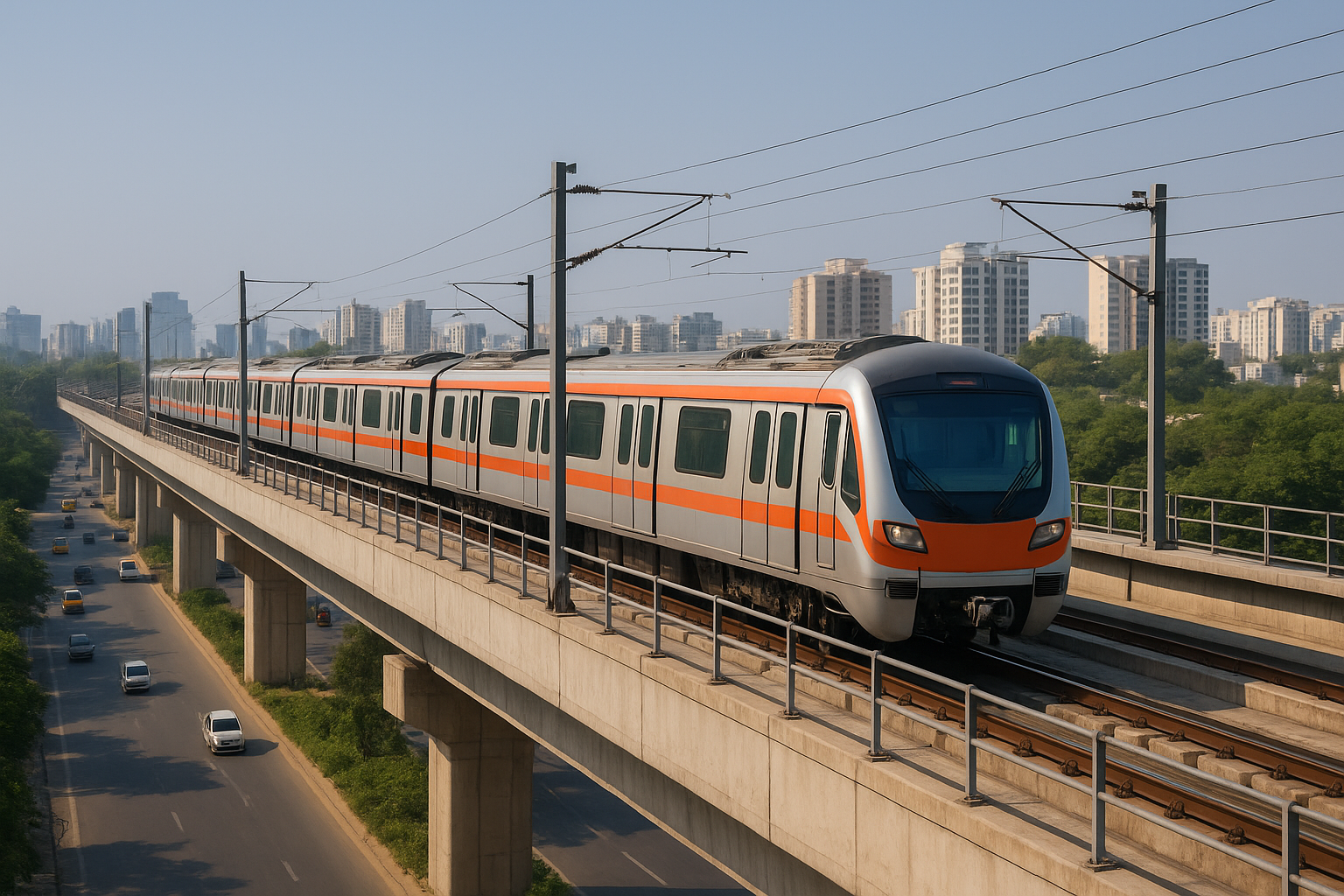
Metro and rapid transit projects remain among the most active sources of government tenders within the broader category of urban infrastructure projects in India. Phase 2 and Phase 3 expansions are underway in Delhi, Mumbai, Bengaluru, Chennai, Hyderabad, and Pune, keeping civil, systems, and consultancy packages in continuous circulation.
The biggest 2026 opportunities by project type
Elevated viaduct construction, underground tunneling contracts, and station fit-out packages are generating the highest tender volumes this year. Your firm should also watch for rolling stock maintenance and depot construction, both of which run on separate procurement tracks from civil works.
Civil works packages that keep recurring across corridors
Piling, box-pushing, and structural concrete packages tend to repeat across every new corridor with minor scope adjustments. These packages offer consistent eligibility benchmarks, making them useful for building a track record toward higher-value contracts.
Firms that win smaller recurring packages within a corridor often get preferential experience credit when larger systems integration tenders float.
Utility shifting, traffic management, and safety constraints
Utility relocation and traffic diversion management appear in nearly every urban metro tender and frequently cause timeline disputes. Reviewing these clauses early in the document gives your bid team a realistic picture of execution risk.
Approvals and stakeholders that influence schedules
CMRS approvals and state government land acquisition are the two factors most responsible for delayed package releases. Tracking these milestones tells you whether a tender is genuinely imminent or still months away.
Tender signals that a new package is about to drop
Watch for NIT pre-publication notices and pre-bid meeting announcements on the respective metro corporation portals. These typically appear two to four weeks before the formal tender floats.
4. Delhi-Mumbai Expressway and city access upgrades
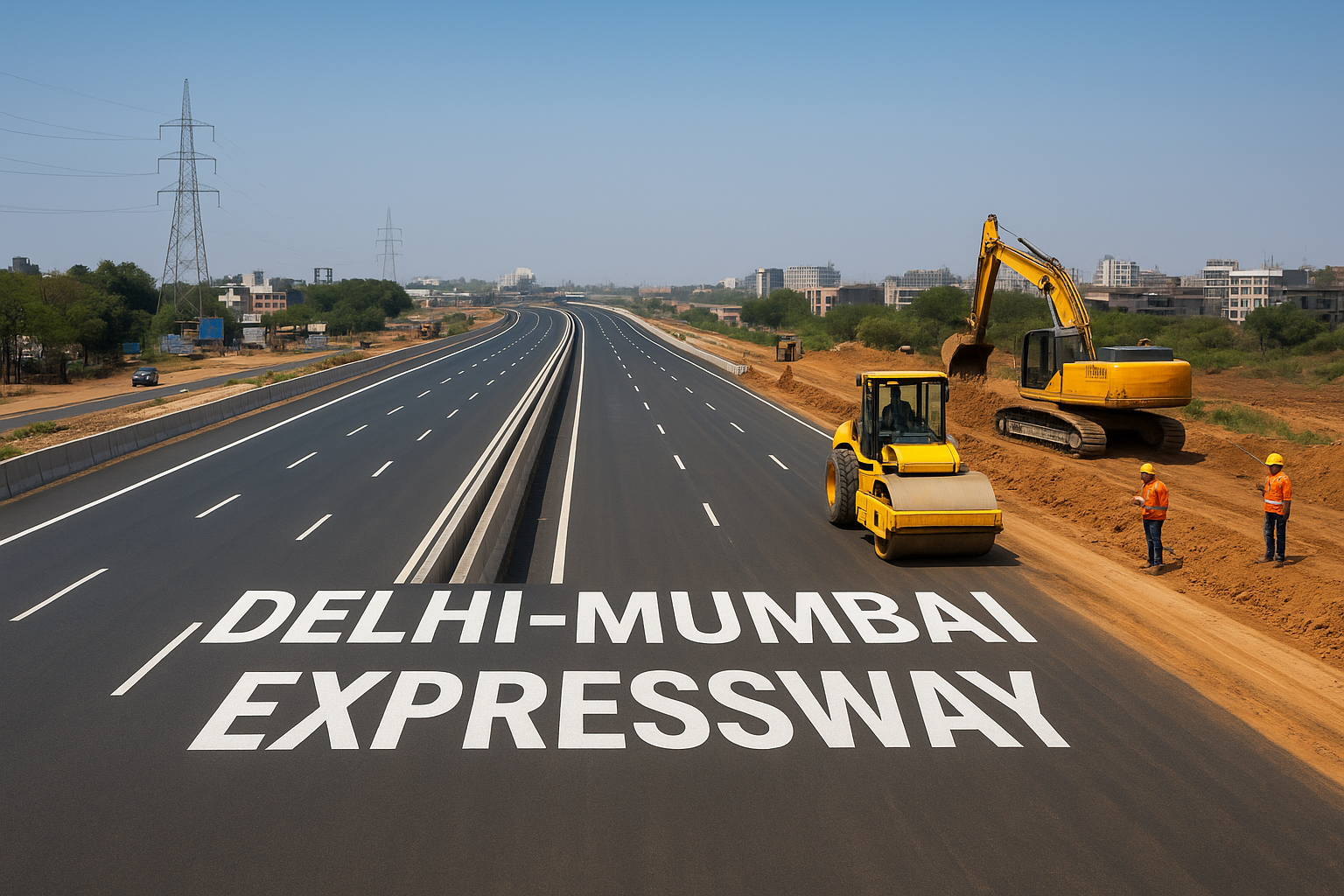
The Delhi-Mumbai Expressway spans over 1,350 km and keeps generating urban access contracts in 2026 as city-level connecting infrastructure catches up with the main corridor.
Why this corridor still creates urban work in 2026
Even where mainline construction is complete, surrounding cities still need connecting roads, drainage, and service infrastructure. These cities are issuing standalone tenders for access improvements, making this corridor one of the most active urban infrastructure projects in India to monitor this year.
Interchanges, spurs, and urban last-mile connectors to watch
Interchange packages and urban spur roads in cities like Vadodara, Surat, and Indore are seeing active procurement. Track state NHAI portals for packages linking the expressway to city road networks.
Pre-qualification criteria here often mirror NHAI's standard civil contractor requirements, so verify your NHAI registration status before committing bid preparation time.
Structures and systems that show up in high-value packages
Flyovers, underpasses, and drainage structures dominate high-value access packages, often above ₹50 crore. Signage, lighting, and ITS systems typically appear as separate lots within the same tender.
Common risks in documents and how to spot them early
Land acquisition clauses and utility relocation obligations are the two sections most likely to inflate execution cost. Reviewing these early helps you price risk accurately before committing resources.
How to track packaging changes across sections and states
Packaging decisions shift as state governments and NHAI renegotiate scope boundaries. Monitor the NHAI tender portal and state PWD portals for corrigenda that split or combine packages across sections.
5. NICDC industrial corridors and new industrial cities
The National Industrial Corridor Development Corporation is building industrial cities and nodes across six major corridors, including the Delhi-Mumbai and Chennai-Bengaluru corridors. Each node generates a concentrated burst of urban infrastructure projects in India, covering roads, utilities, civic amenities, and institutional buildings within a defined development zone.
Why industrial nodes turn into urban infrastructure demand
Industrial nodes need full urban-grade infrastructure before manufacturers will commit to them. Roads, water supply, sewage treatment, and workers' housing are procured as separate packages, often in parallel, creating multiple simultaneous opportunities for civil and systems contractors.
The core urban packages inside new cities and nodes
Trunk infrastructure and utility networks dominate early-phase procurement, followed by institutional buildings and commercial zones. Plot-level infrastructure packages tend to follow once anchor industries confirm their allocations.
NICDC project pages on nicdc.in carry the most current package status, so check them directly before investing in bid preparation.
Land, utilities, and compliance items that affect timelines
Land handover delays and environmental clearances are the two most common causes of tender postponement inside industrial corridors. Build those risks into your go or no-go assessment before committing resources.
How special purpose vehicles procure and pre-qualify bidders
Each corridor operates through a dedicated SPV that runs its own portal and pre-qualification process, separate from central platforms. Register with the relevant SPV early to receive notifications before tenders reach aggregators.
A quick checklist to assess fit before you spend on a bid
Before committing, confirm your annual turnover meets the 2.5x threshold common in NICDC packages, verify you hold documented experience in at least one similar urban utility project, and check that your firm is registered with the specific SPV running that node.
What to do next
The five programs covered here represent a significant share of active urban infrastructure projects in India in 2026, but the real opportunity lies in tracking them consistently, not just reading about them once. Each program generates dozens of packages throughout the year, and the firms that win are the ones who spot tenders early, assess eligibility fast, and submit before the field fills up.
Start by mapping each program against your firm's current credentials and annual turnover. Identify where you qualify today and where you need a few stepping-stone contracts to compete for higher-value packages later. Then build a monitoring system that catches new tenders before they reach aggregators.
Arched gives your BD team a structured way to do exactly that, combining real-time portal monitoring with eligibility-based matching and document analysis. See how the platform works and decide whether it fits your 2026 pursuit strategy.