What Is Parametric Modeling? CAD, ML, Examples Explained
What Is Parametric Modeling? CAD, ML, Examples Explained
Engineers and designers face a constant challenge: how do you explore hundreds of design options without manually rebuilding each model from scratch? The answer lies in understanding what is parametric modeling, a method that uses parameters and rules to define geometry, enabling rapid iteration and optimization.
Parametric modeling powers everything from automotive components to skyscrapers. In bridge engineering specifically, it's the foundation that allows engineers to generate and evaluate many structural variations, scoring each for cost, durability, and carbon impact. Without parametric principles, this kind of large-scale design exploration would be impossible.
This article breaks down parametric modeling across its primary applications: 3D CAD design, statistical analysis, and machine learning. You'll learn how parameters drive geometric relationships, where parametric approaches differ from direct modeling, and how engineers apply these concepts to solve real optimization problems.
Why parametric modeling matters in engineering
Engineers spend roughly 70% of their design time on revisions and iterations, not on initial geometry creation. Traditional fixed modeling forces you to rebuild sections manually every time a constraint changes, whether that's a beam depth, span length, or load requirement. Parametric modeling eliminates this repetitive work by encoding relationships between design elements, so a single parameter change propagates through the entire model automatically.
Design iteration speed
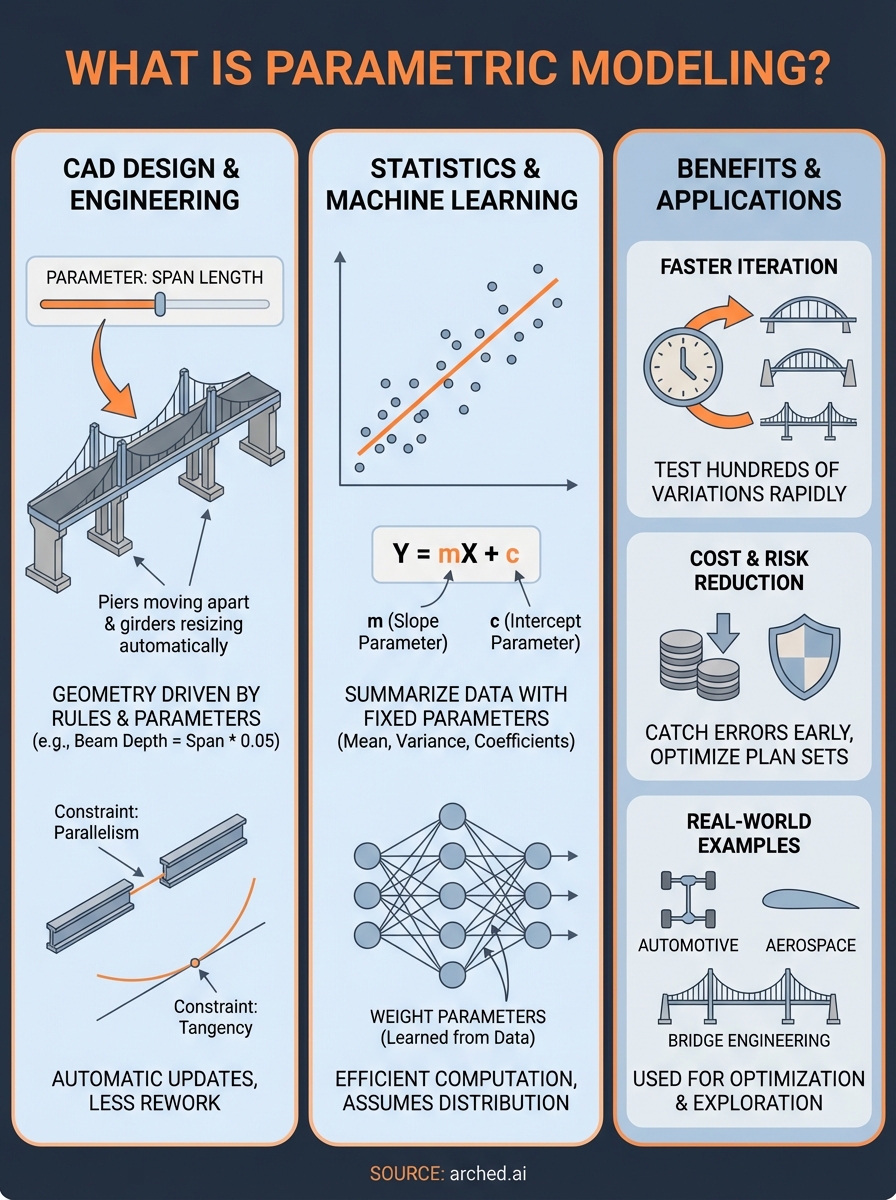
You gain the ability to test hundreds of design variations in the time it would take to manually model three alternatives. When a client requests a longer span or a contractor suggests a different beam spacing, parametric models update instantly rather than requiring you to redraw connection details, adjust pier placements, and recalculate member sizes. Bridge engineers at state DOTs report that parametric workflows reduce iteration cycles from weeks to days, allowing teams to explore optimization opportunities that would otherwise remain hidden due to time constraints.
Parametric relationships turn design exploration from a linear process into an exponential one, where each constraint adjustment reveals new possibilities.
Cost and risk reduction
Understanding what is parametric modeling means recognizing its financial impact on project delivery. Design errors caught early through rapid iteration prevent costly field changes that can run into six figures for bridge projects. You reduce change order risk by validating more scenarios during the design phase, and contractors benefit from receiving optimized plan sets that balance constructability with material efficiency. Parametric systems also create audit trails showing how each design decision relates to project requirements, which proves critical when defending engineering choices to regulatory agencies or during value engineering sessions with stakeholders.
How parametric CAD modeling works
Parametric CAD systems store geometry as mathematical relationships rather than fixed coordinates. When you define a rectangle, you're not drawing four static lines but instead creating parameters like "width = 10 inches" and "height = 5 inches" that the software uses to generate the shape. This distinction transforms how you interact with your models, because adjusting a parameter value instantly recalculates every dependent feature without requiring you to manually redraw anything.
Parameter-driven geometry
You begin by establishing base parameters that represent critical dimensions: beam depth, span length, flange width, or web thickness in structural applications. These parameters accept numerical values but also formulas, so you might set "flange_width = beam_depth * 0.3" to maintain proportional relationships. Every subsequent modeling operation references these parameters rather than hard-coded numbers, which means your entire model remains flexible to specification changes throughout the design process.
Parameters act as the DNA of your model, encoding design intent that survives through every revision cycle.
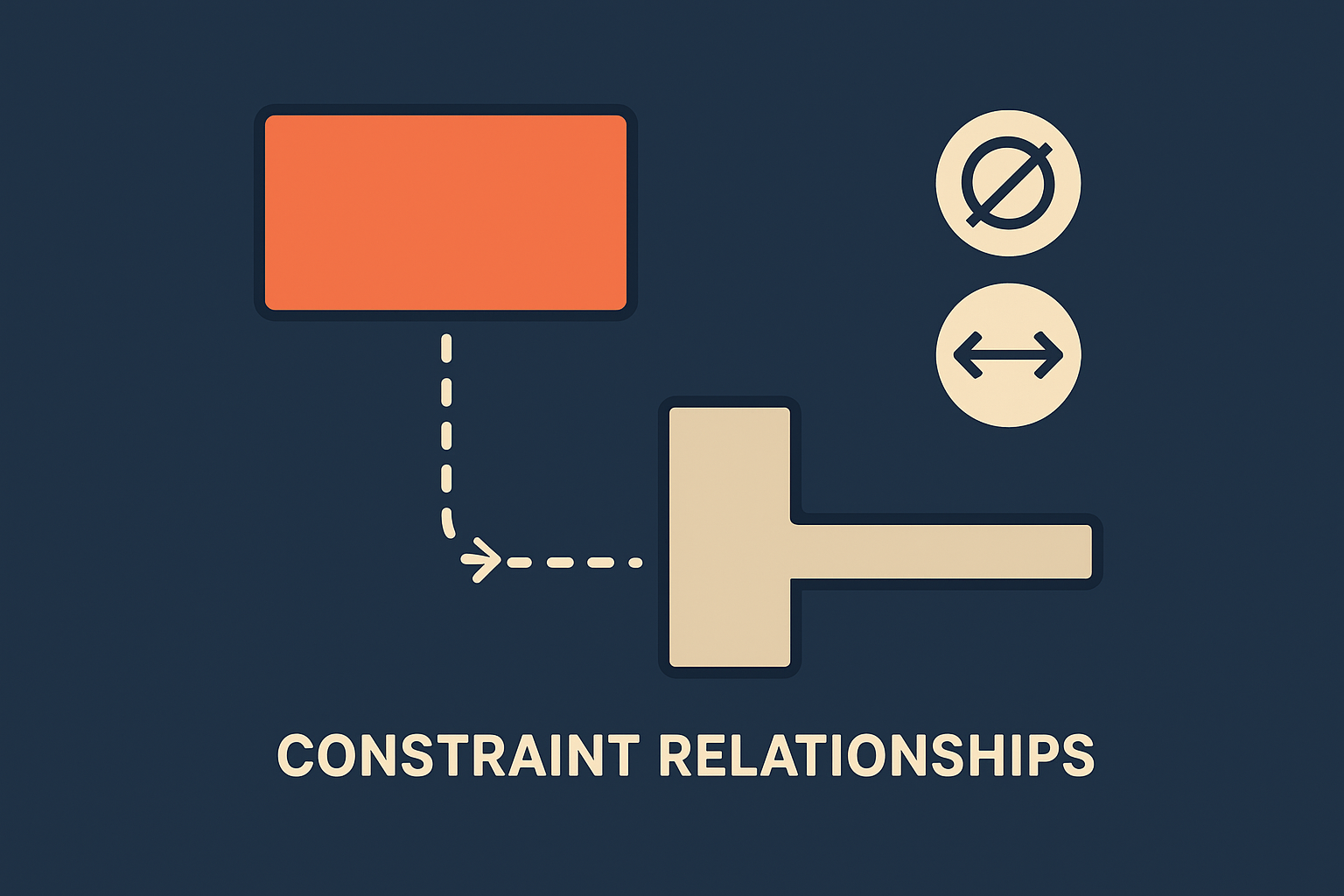
Constraint relationships
The real power emerges when you define constraints between geometric elements: parallelism, perpendicularity, tangency, or dimensional relationships. These rules ensure that when you modify a beam height, the connection plates automatically adjust their positions to maintain proper clearances. Constraint-based modeling prevents the geometric inconsistencies that plague manual updates, where you might change one dimension but forget to update a dependent feature three operations later.
Parametric vs direct modeling in CAD
Direct modeling lets you push, pull, and manipulate geometry like digital clay without worrying about underlying parameters or constraint histories. You select a face and drag it to a new position, and the software simply moves it. This approach works well for conceptual design or one-off modifications, but it breaks down when you need to maintain design intent across multiple revisions. Understanding what is parametric modeling helps you recognize when each approach serves your project best.
When direct modeling makes sense
You benefit from direct modeling during early concept exploration where design requirements remain fluid and you need to quickly sketch out spatial relationships. Product designers use it for styling work where aesthetic curves matter more than precise dimensional control. It also excels for editing imported geometry from other systems where you lack access to the original parameter structure, allowing you to make quick fixes without rebuilding the entire model from scratch.
Why parametric wins for engineering
Engineering projects demand repeatable accuracy and traceability, which direct modeling cannot provide. When a structural engineer needs to adjust a beam depth after load calculations change, parametric systems automatically update every dependent connection, stiffener, and clearance dimension. You preserve the complete design history, allowing teams to audit decisions and roll back changes without losing critical relationships that ensure code compliance and constructability.
Parametric modeling transforms engineering changes from risky manual edits into controlled, traceable updates.
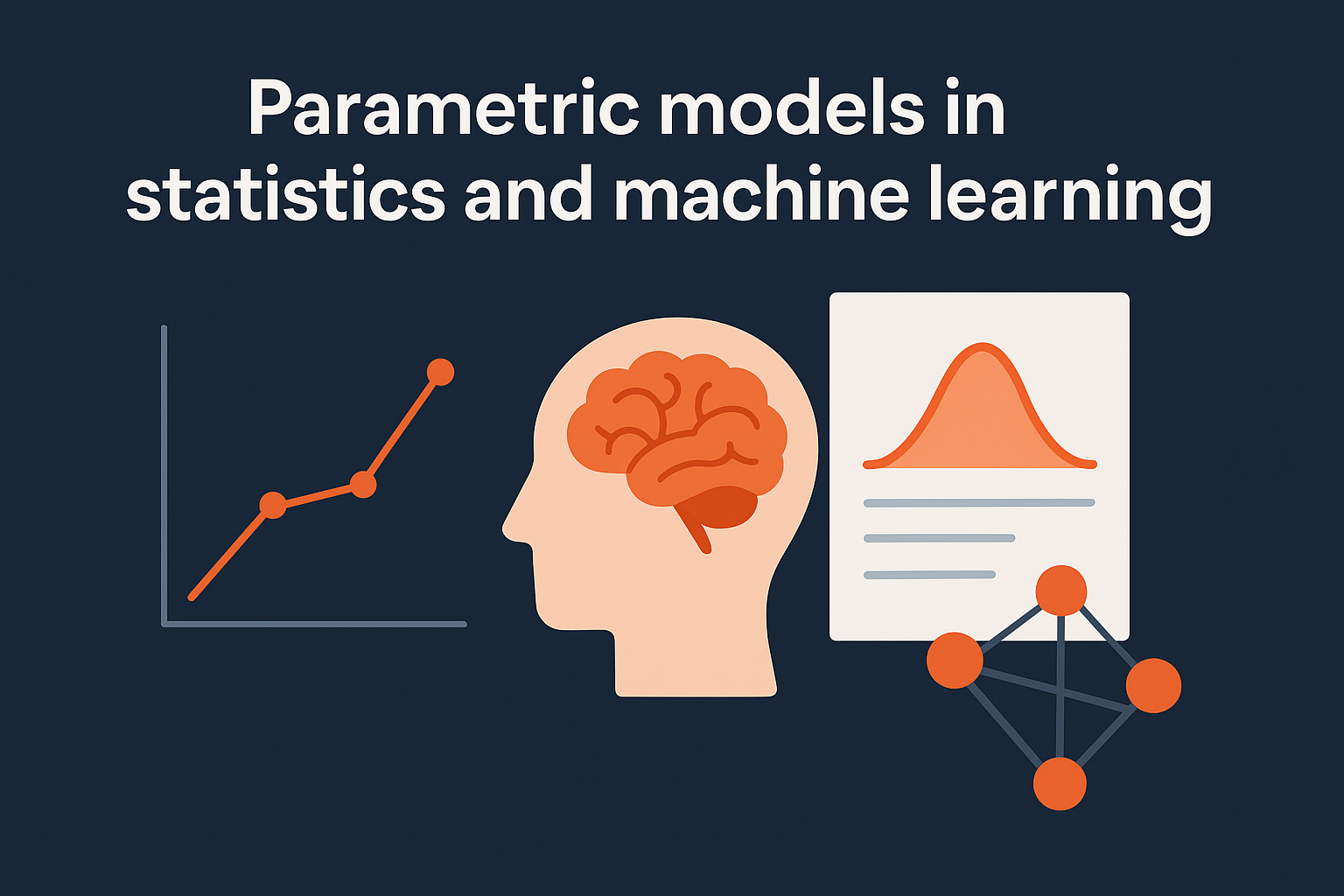
Parametric models in statistics and machine learning
Understanding what is parametric modeling extends beyond CAD into statistical analysis and machine learning, where the term describes models that summarize data with a fixed set of parameters. Unlike CAD's geometric relationships, statistical parametric models assume your data follows a specific mathematical distribution characterized by parameters like mean, variance, or coefficients. Linear regression exemplifies this approach, where you estimate slope and intercept parameters that define the relationship between variables.
Statistical parametric assumptions
Statistical parametric models require you to assume your data fits a known probability distribution before analysis begins. When you run a t-test, you assume normal distribution; for logistic regression, you assume a binomial outcome. These assumptions let you estimate relationships using fewer parameters than your dataset contains, which makes models computationally efficient but potentially inaccurate if your assumptions prove wrong. The tradeoff means faster computation and clearer interpretation at the cost of flexibility when real-world data deviates from theoretical distributions.
Parametric statistical models trade flexibility for efficiency by condensing infinite possibilities into a fixed set of learnable parameters.
Machine learning applications
Neural networks and regression algorithms use parametric approaches to learn patterns from training data by adjusting weight parameters. You define the model structure upfront (number of layers, activation functions), then optimize parameters through backpropagation. This differs from non-parametric methods like k-nearest neighbors, which grow in complexity as datasets expand rather than converging to a fixed parameter count.
Examples, benefits, and common pitfalls
You see parametric modeling applied across industries where design iterations drive project success. Automotive manufacturers use parametric assemblies to test crash scenarios across different vehicle configurations, while aerospace engineers apply it to optimize wing geometries for varying flight conditions. Understanding what is parametric modeling means recognizing how these systems reduce manual rework by 60-80% compared to fixed geometry approaches, allowing teams to explore optimization opportunities that would remain hidden under traditional modeling constraints.
Real-world parametric applications
Bridge engineers leverage parametric systems to automatically adjust pier spacing, girder depths, and connection details when span lengths change during preliminary design. HVAC designers use parameters to maintain proper clearances as duct sizes vary based on load calculations. You gain the ability to encode design rules once and apply them across hundreds of variations, which proves critical when contractors request value engineering alternatives or when site conditions force mid-project adjustments.
Critical mistakes engineers make
The most common error involves over-constraining models with redundant relationships that create circular dependencies, causing your system to fail when you modify parameters. You also risk failure by defining parameters without clear naming conventions, which makes models unmaintainable when other team members inherit your work. Never assume parametric relationships eliminate the need for engineering judgment, as automated variations still require validation against code requirements and constructability constraints.
Parametric power multiplies when you balance automation with human verification.
Final takeaways
Understanding what is parametric modeling gives you the framework to transform repetitive design work into automated optimization. Whether you apply it to 3D CAD geometry, statistical analysis, or machine learning, the core principle remains consistent: parameters and relationships drive your models instead of fixed values. This shift eliminates manual rework when constraints change and enables you to explore design spaces that manual methods cannot reach.
Engineers who master parametric principles spend less time rebuilding models and more time validating optimal solutions. You gain the ability to test hundreds of variations, quantify tradeoffs between competing objectives, and deliver designs that balance cost, performance, and sustainability. Bridge projects particularly benefit from this approach, where parameter-driven analysis reveals value engineering opportunities hidden within massive design spaces.
Once a design is fixed, the next job is pricing it. If you are bidding a bridge package, Arched can prepare the estimate and BOQ from your drawings, reviewed by an engineer. See how our estimating service works.
Have a package your team can’t get to? Send it to us. Our engineers check and sign off everything we deliver.